The Gist
- Agent experience is the loyalty engine now. Verizon and Cox Automotive show why the fastest way to improve customer experience is to equip the people (and systems) delivering it.
- Digital-first wins only when it feels personal and complete. FedEx and Hyatt make the case that “self-service” isn’t a channel strategy — it’s a trust strategy that has to work end-to-end.
- The best CX teams serve ecosystems, not just “customers.” The UPS Store and Pfizer prove that partners, franchisees, employees and field teams aren’t adjacent to CX — they set the ceiling for it.
Beyond the Call keeps landing on the same truth: modern customer service isn’t being “transformed” by a shiny tool — it’s being rebuilt through discipline. The episodes below show leaders making hard choices about where automation belongs, where humans must stay in control and what it takes to make consistency feel human at scale.
Across Verizon, FedEx, The UPS Store, Hyatt, Pfizer and Cox Automotive, you can see the new service operating system taking shape: agent enablement as a strategic priority, digital-first as a customer promise (not a cost-cutting move) and experience design that treats the whole ecosystem as the customer.
Editor’s note: This recap highlights key points from six Beyond the Call episodes.
Speakers

Dom Nicastro
Episode Summary
Inside the Best CX Leader Talk
A quick scan of the six conversations — and what each one reveals about modern customer service leadership.
| Episode | Company | Core Idea | Why It Matters |
|---|---|---|---|
| AI + Agent Experience = Loyalty | Verizon | AI-enabled agents, purposeful automation | Empathy scales when data, coaching and workflows actually work together. |
| Quality Culture + Digital-First Service | FedEx | Continuous improvement, digital-first answers | When digital fails, customers don't "switch channels" — they lose trust. |
| Serve Two Customers, Not One | The UPS Store | Franchisee experience as CX ceiling | Ecosystem alignment beats dashboards — especially in distributed service models. |
| Standards Meet Personalization | Hyatt | Consistency with local flexibility | Hospitality proves the "one-size-fits-all" era is over — without sacrificing quality. |
| Customer Excellence as a System | Pfizer | Field feedback, omnichannel listening, CX discipline | In complex industries, CX is less "journey mapping" and more operational truth. |
| EX to CX, With Proof | Cox Automotive | Culture as KPI driver | Recognition, symbols and frontline programs become measurable service outcomes. |
Agent Experience Becomes the New CX Equation
Verizon makes the point bluntly: AI doesn't replace the agent — it changes what the agent can do. The episode frames agent experience as the practical bridge between "we have data" and "customers feel known." Better coaching, real-time guidance and unified context turn empathy into a repeatable behavior instead of a personality trait.
Cox Automotive adds the missing ingredient: culture that operationalizes the promise. Their Five-Star Service program treats employee enablement as the mechanism for customer experience outcomes, not a separate HR initiative. When you combine intentional rituals (like onboarding symbols), frontline feedback loops and analytics, you don't just "motivate the team" — you build a system where service improvement is continuous and visible.
Digital-First Is a Trust Strategy, Not a Channel Strategy
FedEx puts digital-first in the harshest light possible: most interactions still boil down to a single question ("Where's my package?"), and customers expect the answer without friction. The takeaway isn't "invest in self-service." It's: the moment customers have to call because digital didn't deliver, your experience already failed — and you've introduced unnecessary anxiety into a high-stakes moment.
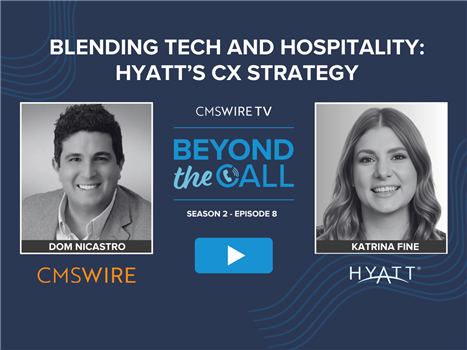
Hyatt shows how the same dynamic plays out in hospitality. Standards matter because they protect consistency, but personalization matters because it protects humanity. The interesting move here is the decision-making layer: what must stay uniform globally, and what should flex by property, region and guest context. Done right, the guest doesn't experience "process" — they experience ease.
Serve the Ecosystem: Franchisees, Field Teams and the People Who Touch Reality
The UPS Store challenges a common CX blind spot: the end customer isn't the only customer. In franchise models, the franchisee experience is the infrastructure that delivers the brand promise. If the franchisee is undertrained, undersupported or working around broken processes, the brand's customer experience can't out-perform that constraint. The episode's "two customers" lens is a useful forcing function for any partner-heavy business.
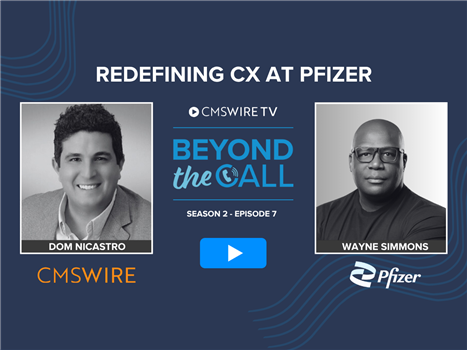
Pfizer takes this idea into a different environment: regulated complexity and human relationships at scale. The episode reframes field reps as a primary source of CX intelligence — not just a sales channel — and positions customer excellence as something you operationalize through listening, sensemaking and education. The deeper point: in complex industries, you can't manage CX by survey alone. You need systems that turn qualitative reality into enterprise action.
Automation With a Conscience: Purposeful Interactions Win
One theme cuts across every conversation: automation only works when it's intentional. Verizon's framing is especially useful here — purposeful interactions that respect customer emotion and human limits. FedEx echoes the same philosophy from a different angle: if digital-first is the strategy, then the digital experience must actually solve the problem in context, not just deflect volume.
This is where Hyatt and Cox Automotive intersect, too. Standards and culture are both forms of experience governance. They aren't red tape — they're the guardrails that help teams deliver consistent service while still acting like humans. The best automation in these episodes isn't "more bots." It's better orchestration: the right context, the right handoff, the right moment for a person to matter.
Conclusion: Modern Service Is Built, Not Announced
If you want the through-line from these episodes, it's this: the best CX teams are building operating systems. They're combining culture, standards, digital-first design and AI-enabled enablement into a disciplined way of working — so customers don't feel the organization behind the service. They feel the service.