Editorial
White Paper
How Enterprise Legal Teams Are Rethinking How Matters Get Managed

This month, the eyes of the world have been on Italy for the Winter Games in Milan Cortino. Audiences have been captivated by the heart, passion, endurance and resilience of young athletes from around the world as they compete for the chance to medal. These Olympians do not just show up on a global stage and hope things work out. They train relentlessly, rely on expert coaching, lean on their teammates, recover from injuries and setbacks and compete within cultures that demand high performance.
Their excellence is not accidental. It's intentional and hard-earned.
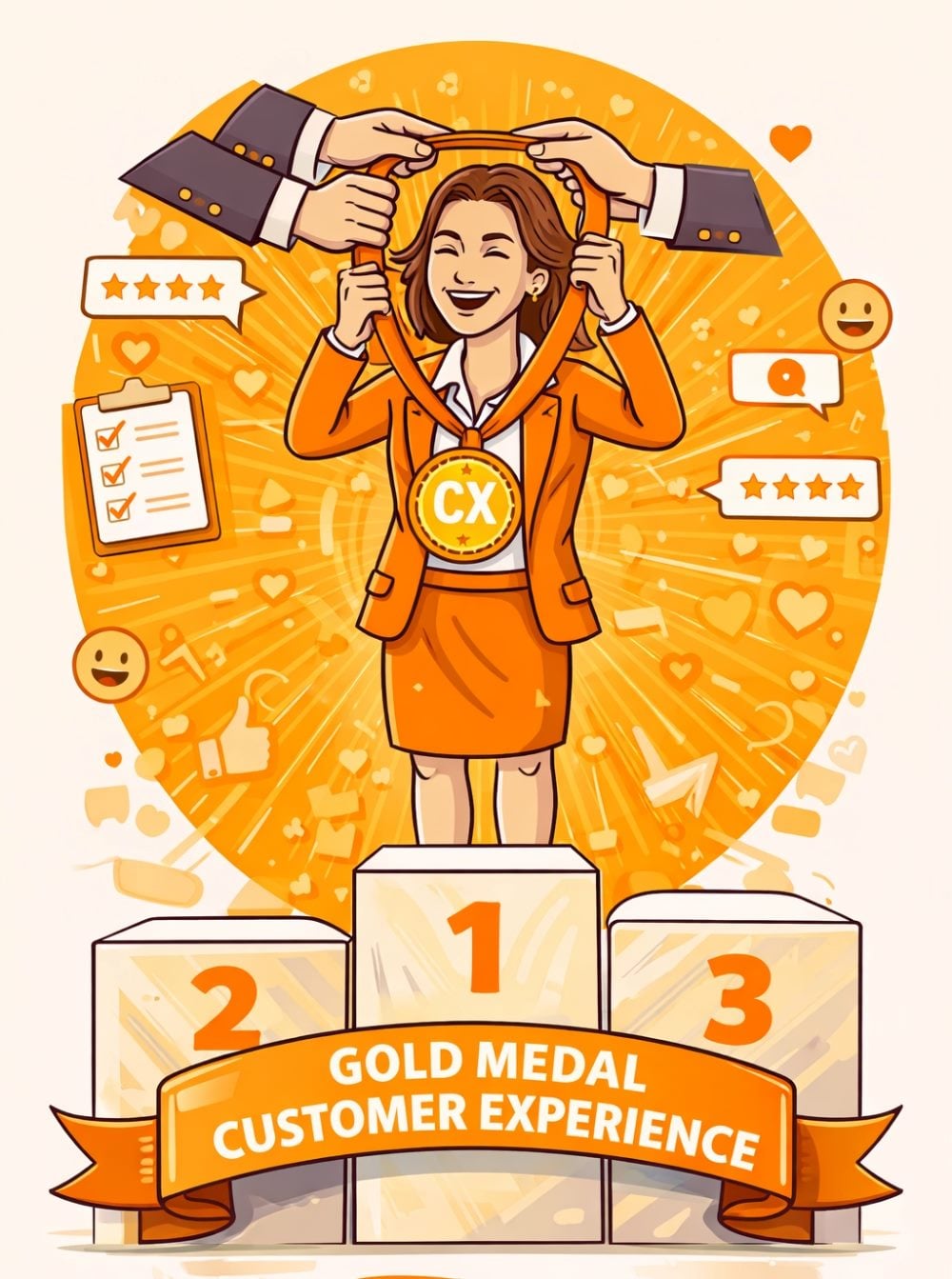
Building and activating a customer experience strategy demands the same unseen dedication. Organizations striving to deliver exceptional customer experience are in many ways training for their own Olympic moments. And just like Olympic success, the difference between medaling and going home empty-handed often comes down to what's happening behind the scenes.
Olympic Figure Skaters don't wait until they are at the games to start practicing their jumps and spins. The skiers and hockey players work for years on conditioning and learning how to brave the elements. They invest the time perfecting fundamentals and building muscle memory, so they are prepared to meet the moment when it arrives.
And talk about meeting the moment this week. Check out Megan Keller's game-winning goal in overtime to lift the US to a 2-1 win over Canada in the women's ice hockey gold medal game:
Similarly, exceptional experience isn't created in a workshop or launched with a single initiative. It requires constant attention and evolution. Every employee interaction, every process refinement, every data point analyzed is part of the training regimen.
Companies that treat CX as a one-time project are like athletes who only train during Olympic years; they simply can't compete with those who've made it a daily discipline. Just like the athletes, the experience pros at the top of their games are committing to a program and putting in the work:
Case in point: The 1980 US men's hockey team, which stunned the dominant Soviet Union with a 4-3 victory in the Olympic semifinal. Team effort? How about a ragtag bunch of amateur hockey players from the Midwest and New England beating a Soviet team that had won four straight Olympic gold medals.
Related Article: The Ultimate Blueprint for High-Performing Customer Experience Teams
No athlete reaches the podium alone, no matter how talented they are. Behind every Olympic medalist is a team of coaches, nutritionists, sports psychologists, and trainers. Experience transformation requires the same collaborative approach and broad, varied system of support.
When it comes to Olympic level talent, the complexity of the ecosystem requires a unique combination of extraordinarily skilled and committed experts working for the good of the athlete. The coordination and integration of these varied areas of expertise is centered on the singular goal of helping that athlete perform at the highest level.
In the same way, organizations that rally around key experience journeys — be it customer, employee or change — will have a much surer path to achieving their organizational goals. A team approach and a shared commitment to success is not a nice-to-have. It's non-negotiable.
Olympic athletes are fortunate that the very vessels of their success, their bodies, come with trackable metrics. Heart rate variability. Power output. Strength. Endurance. Video analysis of form.
When it comes to experience, the metrics aren't always as straightforward or easy to track. A goal of "improving customer satisfaction" is akin to telling an athlete to "skate faster." It's not wrong, but it's also not helpful in measuring progress.
The experience programs operating at the highest level will identify those areas that are most aligned to organizational goals and then establish core KPIs to track improvement. Those can include anything from customer effort score to customer lifetime value to churn rate. Equally important is to track establish baseline performance, set ambitious targets and measure progress relentlessly.
More importantly, the most successful leaders connect these metrics to business outcomes. Olympic athletes know exactly how their training translates to performance. In the same way, elite leaders must demonstrate how experience improvements drive revenue growth, cost reduction and competitive advantage.
Related Article: Stop Debating CX Metrics and Start Fixing What's Broken
Speaking of competitive advantage, whether they like to admit it or not, elite athletes usually have an eye on their top opponents. And they are often inspired by them as well. Because the moment you stop looking for inspiration and new challenges is the moment someone sneaks past you on the podium (or the product launch).
When Olympians break world records, they compete with themselves but also with every other medal contender. The moment you stop improving is the moment someone passes you, so awareness is key.
Customer expectations are set by the best experience they've had anywhere, not just in your industry. When customers experience moments that delight them, they become their benchmark. Every interaction with your brand is implicitly compared to the gold standard they've experienced elsewhere.
Complacency is fatal in both athletics and customer experience. The moment you think your experience is "good enough" is the moment a competitor is working harder, investing more and innovating faster. Experience leaders maintain their position through relentless improvement and reinvention.
Olympic athletes train their minds as intensively as their bodies. They visualize success, manage pressure and maintain focus when it matters most. They also make adjustments as they go, listening to data — and their instincts — and tweaking accordingly.
Activating a customer journey strategy requires similar mental toughness. There will be resistance to change. Budget constraints. Competing priorities. Technical challenges. Stakeholders who don't see the value. And that's probably just during your first week! The organizations (and leaders) that succeed are those with the resilience to push through obstacles, the patience to stay committed during implementation challenges and the conviction that work matters. They also know how to articulate and demonstrate the value they are delivering in ways that connect with their audience.
Experience transformation can feel like a cross-country ski event, demanding both endurance and the ability to move quickly when opportunities arise. Experience Leaders must maintain enthusiasm and commitment even when results aren't immediate or they're feeling like they're "over their skis."
Many initiatives fail because organizations try to do too much too fast. They launch sweeping changes across every channel and touchpoint simultaneously, overwhelming employees and confusing customers. Better to focus on high-impact improvements, implement them well, learn from the results and then expand, just as athletes ruthlessly prioritize honing one skill before adding complexity.

How the discipline behind Olympic success mirrors the foundations of high-performing customer experience programs.
| Olympic Success Trait | What It Looks Like in Sport | Customer Experience Equivalent |
|---|---|---|
| Relentless daily training | Years of conditioning, repetition and refinement before stepping onto the global stage. | Continuous CX optimization through journey reviews, process improvements, employee enablement and data analysis. |
| Elite coaching | Head coaches and specialists guiding performance, correcting weaknesses and setting strategy. | Executive sponsorship and CX leadership that sets vision, removes roadblocks and aligns teams to shared outcomes. |
| Team coordination | Athletes, trainers and support staff operating as a unified ecosystem focused on one goal. | Cross-functional collaboration across marketing, sales, operations and service to deliver seamless experiences. |
| Performance metrics | Tracking heart rate, speed, strength and form to drive measurable improvement. | Clear KPIs such as customer effort score, lifetime value, churn and revenue impact tied directly to business results. |
| Competitive awareness | Studying rivals, adapting techniques and pushing past world records. | Monitoring market leaders and rising disruptors while benchmarking against best-in-class experiences anywhere. |
| Mental toughness | Managing pressure, setbacks and expectations while staying focused on execution. | Driving change through resistance, budget constraints and organizational fatigue with resilience and clarity. |
| Progressive improvement | Refining one skill at a time before adding complexity. | Prioritizing high-impact journey improvements before scaling transformation across channels. |
| Podium mindset | Viewing a medal as validation — not the finish line. | Recognizing CX wins as momentum builders, continuously raising standards as expectations evolve. |
For Olympic athletes, winning a medal isn't the end; while it's validation of their approach, it's often also motivation to defend their title or improve their performance. They study their results, identify what worked and what didn't and begin preparing for the next competition.
Similarly, experience and change success creates new opportunities and higher expectations. When you improve an experience, customers and employees notice. But they also expect you to maintain that standard while continuing to innovate. Improving experience is never "won." It's an ongoing commitment to meeting evolving needs and staying ahead of rising expectations.
The Olympics are a wonderful reminder that true excellence requires dedication that only a few are willing to give. Most athletes never make it to the Olympics. Of those who do, fewer still reach the podium. But those who succeed share common traits: unwavering commitment to preparation, willingness to put in the work when no one is watching, resilience through setbacks and the discipline to keep improving.
Building a world-class experience demands the same athletic mindset:
Is your organization ready to take on the challenge of creating a Gold Medal experience strategy across your organization?
 Learn how you can join our contributor community.
Trish is an experience and innovation executive, practitioner and speaker who has spent the past 15 years driving cultural transformation and customer advocacy and employee engagement across diverse industries such as insurance, pharmaceutical distribution and financial services. Trish has led research and insights teams, implementing and evolving customer strategy, consumer insights and competitive intelligence capabilities. Connect with Trish Wethman, 2025 Contributor of the Year: 