Editorial
Research Report
The 2026 State of CX Outsourcing

Customer experience has become one of the most over-engineered and least accountable disciplines in modern business. Over the past decade, organizations have layered on new titles, new frameworks and new technologies in the hope that experience could be designed, managed and optimized as a standalone function. The result has not been better retention. It has been more complexity, more distance from execution and more money spent explaining problems instead of fixing them.
This shift did not happen because leaders stopped caring about customers. It happened because caring was reframed as interpretation rather than competence. Instead of asking whether the product worked, whether billing was accurate or whether systems behaved predictably, companies began asking how customers felt. That single pivot created an entire CX industry built on inference, workshops, dashboards and sentiment models. Meanwhile, the operational failures that actually cause churn remained untouched.
Customers do not leave because a brand failed to delight them. They leave because something broke. The industry’s obsession with experience has distracted leaders from that basic truth.
I hate the word expectations. I avoid it in my personal and professional life. In this case, few phrases have caused more strategic damage than “meeting customer expectations.” It sounds responsible, but it introduces ambiguity where none is required. Expectations are unstable, unspoken and different for every customer. Treating them as a strategic input forces organizations into a guessing game they cannot win.
That guessing game fuels the demand for listening tools and predictive models that promise insight into customer sentiment. Companies buy platforms to infer what customers might be feeling rather than confront what customers are actually experiencing. The data consistently shows this effort is misdirected. 61% of customers will leave after a single bad experience, not because the brand failed to surprise them, but because it failed to execute competently.
There is a material difference between managing expectations and managing consistency. Expectation management relies on prediction and interpretation. Consistency relies on execution and control. One produces occasional high points and frequent disappointment. The other produces trust through repetition.
The brands with the strongest retention profiles are rarely exciting. They are predictable. They do exactly what they say they will do, every time, without drama. That reliability compounds quietly. Customers stop evaluating the brand because there is nothing to evaluate.
The fix is not better expectation modeling. It is stricter operational discipline. When consistency becomes the goal, sentiment becomes irrelevant.
Related Article: Customer Retention > Customer Acquisition. Period.
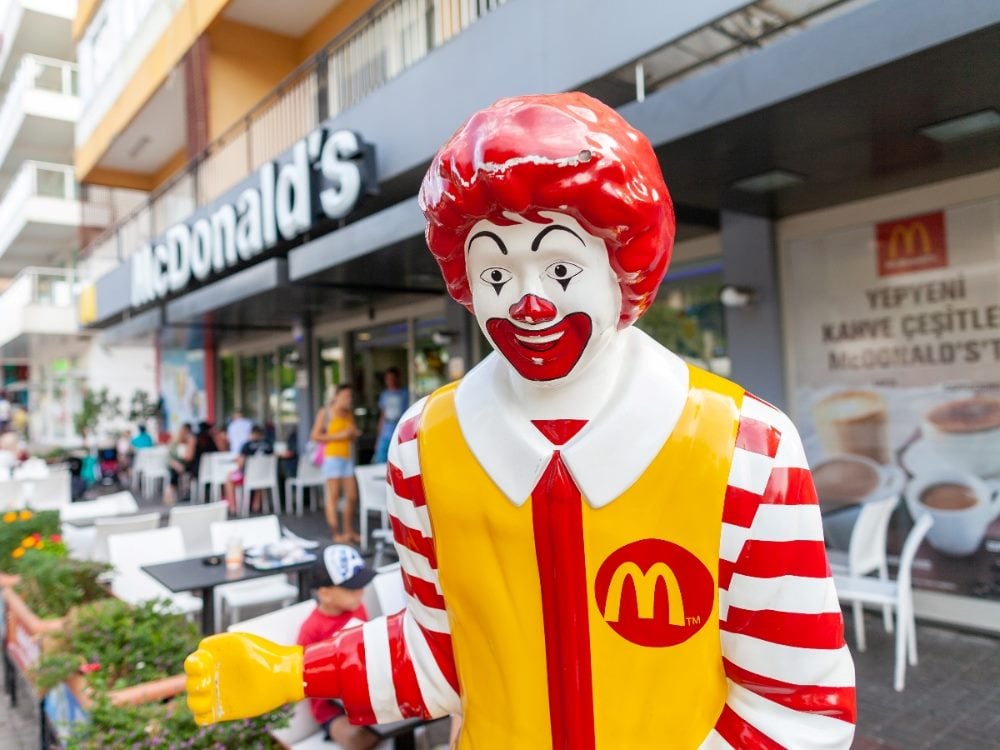
McDonald’s does not succeed because it delights customers. It succeeds because it removes uncertainty.
George Ritzer, in the McDonaldization of Society (1993), explicitly defines "Predictability" as one of the four pillars of McDonald's success (alongside Efficiency, Calculability and Control). He argues that "Predictability is the assurance that products and services will be the same over time and in all locales ... The goal is to provide a world in which there are few surprises."
No one walks into a McDonald’s thinking about what might happen. That is the point. Customers are not forming expectations in the moment. They are operating on conditioning built through repetition. Years of identical products, identical preparation and identical timing have trained behavior. The decision to walk in is not emotional or evaluative. It is habitual.
This distinction matters because conditioning is not anticipation. Expectations require judgment. Conditioning removes it. When a system behaves the same way thousands of times, customers stop assessing it altogether. The brand disappears into the background, replaced by muscle memory. That is not sentiment. It is operational trust.
This is also why McDonald’s failures stand out so sharply. I have a McDonald’s near my house that I do not visit, not because the food changed, but because the system broke. Orders are slow. Accuracy is inconsistent. The conditioning was interrupted. Once reliability cracks, habit collapses quickly. There is no emotional buffer to absorb failure.
Most CX strategies misunderstand the mechanics of customer allegiance. True preference is not forged by sporadic delights. It emerges when the basic mechanics of the experience function without friction so consistently that the customer no longer questions whether the brand will deliver.
Customers are far more sensitive to failure than they are rewarded by occasional excellence. A flawless interaction does not earn sentimental credit, but it does reinforce the belief that the brand can be relied on. In contrast, a broken customer experience dismantles confidence instantly, because it signals that reliability is not a given. When operational variance is low and execution is predictable, customers are more likely to include the brand in their ongoing set of choices, not because they feel affection, but because competence has eliminated the risk of inconvenience.
The real driver of preference is not emotional engagement or surprise. It is the removal of doubt. When systems work seamlessly, customers treat the brand as a default option. When systems fail, they treat the brand as an avoidable risk. This is the operational reality that most CX strategies overlook.
McDonald’s understands this asymmetry. Its competitive advantage is not taste or brand storytelling. It is process control. Supply chains are standardized. Preparation steps are scripted. Timing is measured. Deviation is treated as a defect, not a creative opportunity. The result is not excitement. It is confidence.
That confidence scales. Customers do not evaluate McDonald’s each time they visit. They already know what will happen. The brand disappears into the background, which is precisely why it works.
Most companies attempt the opposite. They chase moments of delight while tolerating systemic inconsistency. They celebrate a great support interaction while ignoring the broken workflow that required support in the first place. They optimize messaging while leaving fulfillment untouched. This creates emotional spikes surrounded by operational drag.
The McDonald’s principle rejects that approach entirely. It prioritizes sameness over sparkle. Accuracy over artistry. Repetition over reinvention.
In customer experience terms, this is radical reliability. It is the discipline of doing the simple things correctly, every time, without exception. It is not inspiring. It is effective.
Customers do not reward brands for being interesting. They reward them for being dependable.
 Learn how you can join our contributor community.
Brian Riback is a dedicated writer who sees every challenge as a puzzle waiting to be solved, blending analytical clarity with heartfelt advocacy to illuminate intricate strategies. Connect with Brian Riback, 2025 Contributor of the Year: 