Editorial
Research Report
Building the Case for Modern Public Sector Messaging


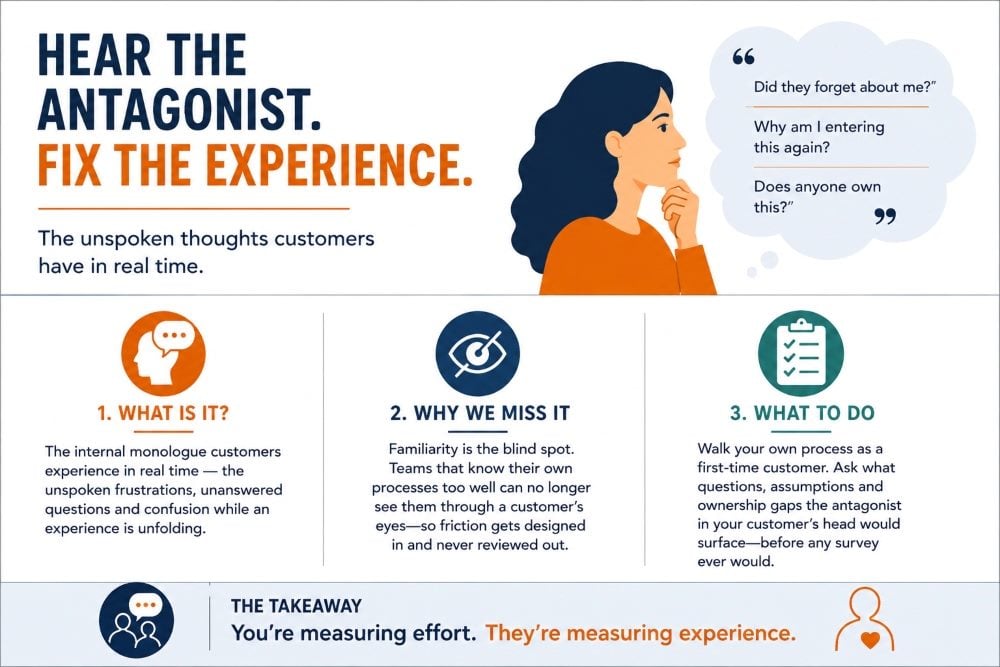
Recently, I’ve been having a lot of fun with something I call “the antagonist’s point of view.”
It started as a joke with some business friends in my networking group. Someone would throw out an observation like, “Should a three-stall garage really only fit two cars?” or “I have to rake my yard … but I don’t even have any trees. It’s my neighbor’s tree dropping all of its leaves into my yard.”
The more I started paying attention to these little observations, the more I realized they’re all pointing to a similar idea.
What they’re actually highlighting is the disconnect between what we expect and what we actually experience.
The more I thought about it, the more I realized our customers have these same thoughts every single day. They just aren’t saying them out loud. They’re thinking, “Why did I have to fill that form out if they were just going to ask me all the same questions again?” Or, “Your website says one thing and your employee just told me something completely different.” Or, “Why am I being transferred again? Doesn’t anybody own this?”
Those are the antagonist’s thoughts.
As customer experience professionals, we spend a lot of time looking at metrics, surveys and reviews to understand what’s happening. And those are valuable, yes, but they only tell us what customers decided to say after the experience was over.
The antagonist’s point of view is different. It’s the conversation happening in their head while the experience is unfolding. I’ve started wondering what would happen if leadership teams spent more time trying to identify those moments before they ever happened.
A few months ago, I was working with a camper rental business that had recently implemented an online booking platform. The software itself was good, and it had plenty of features that were supposed to make the reservation process easier for customers.
As we started talking through the experience, I asked a simple question: "Have you ever gone through the booking process yourselves?" The answer was a wide-eyed NO.
They had done all the initial configuration, managed reservations that came through it and they knew the back-end of the software inside and out. But they had never intentionally sat down and experienced it from the customer's perspective.
So we did. It didn't take long before the antagonist started speaking up.
"Wait ... am I supposed to click here?"
"Did my reservation actually go through?"
"Why am I entering this information again?"
"What happens next?"
None of those questions existed because the team didn't care. They existed because everyone in the business understood the process so well that they could no longer see it through fresh eyes.
I've seen the same thing in dealerships. We’ve all had work done on our vehicles … picture a service advisor during the noon rush. The phones are ringing, technicians are asking questions, customers are waiting at the counter and lunch has been sitting untouched for the last 20 minutes. From the advisor's perspective, they're doing everything they can just to keep up.
From the customer's perspective, the antagonist is quietly narrating a completely different story.
"Did they forget about me?"
"Nobody has given me an update."
"Should I go ask someone?"
"Does anybody here actually know what's going on?"
The advisor isn't lazy. The camper rental company isn't incompetent. In both cases, good people are working hard. The disconnect is that businesses tend to evaluate effort while customers evaluate experience. And those two things are not always the same.
Related Article: Medallia Report Finds the Customer Experience Gap Is Getting Worse
As you open your mind to the antagonist POV, begin to ask yourself these questions:
One of the biggest lessons I’ve learned is that customers don’t evaluate experiences the way businesses do. We evaluate our intentions, but customers evaluate what happened.
The antagonist isn’t there to criticize your business. It’s simply exposing the friction that your customers are experiencing in real time.
Ironically, I think that’s one of the greatest opportunities in customer experience today. Instead of asking how we can surprise and delight customers, maybe we can spend more time asking a much simpler question: “If I were my own customer, what would the antagonist in my head be saying right now?”
The answer to that question might reveal more about your customer experience than any survey ever could.
 Learn how you can join our contributor community.