Editorial
Case Study
Why So Many Digital Modernization Efforts Stall

What creates the gap between the best and worst customer support? Budget? Training? Technology? These are factors, certainly, but without the proper mindset to lead them, these factors won't make the difference you'd hope for.
What is the proper mindset? In this context, it is defined by dynamism and receptiveness to customer signals. Top customer service teams listen to and learn from customer feedback, making real-time adjustments to consistently improve and provide exceptional service.
A PissedConsumer survey that gathered a general of 65,942 consumer opinions on the best and worst customer service reveals how this gap is perceived by the end user. The brands recognized for the best customer service strike an intelligent balance between human CS agents and AI-based support and are praised for speedy resolutions and positive outcomes. Whereas the worst performers are seen to be too dependent on automation, have obscured human support and sluggish resolution times.
What leads businesses towards these opposite ends of the customer experience spectrum? It's a feedback strategy. Here, we'll explore how feedback shapes customer service strategy and introduce methods to optimize the customer experience.
The brands with the best-performing customer service teams understand the importance of the customer feedback loop, implement processes that gather comprehensive, up-to-date data and fast-track relevant fixes based on these fresh insights. The keyword here is relevant.
Using relevant data means separating what's useful from what's not to identify the fixes that will have the most impact on customer satisfaction. This data selection matters because not all feedback is equal. A pattern of complaints in online reviews about late deliveries is more relevant than a single review that criticizes your website layout, for example.
The best-performing customer service operations triage feedback by impact on CX and by cost to reputation. This way, resources can be directed towards "hot spots" rather than wasted on peripheral adjustments that won't matter to the majority of customers.
Focusing on relevant data gives CS teams forward momentum, the ability to meet the customer where the problem resides and proactiveness that enables targeted responsiveness and customer-centric service.
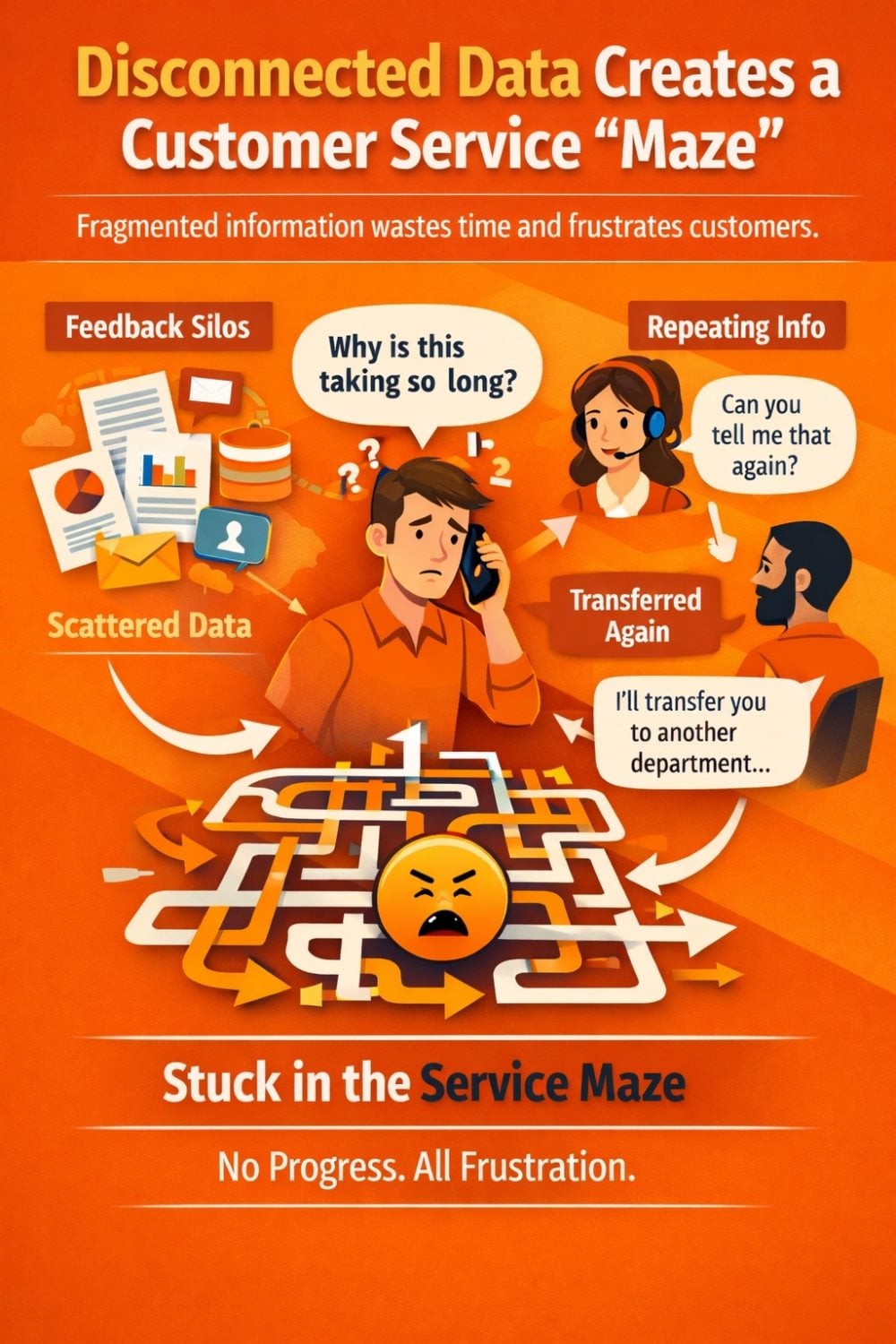
For this to happen, customer feedback data needs to be organized and given context. Disconnected silos of data simply complicate and confuse the work of a customer service team; seen in practice as customers having to repeat themselves or wait as the agent tracks down the necessary information, or worse, passes them to another department. The cumulative effect is the creation of a customer service "maze" where the customer feels little meaningful progress is being made towards a fix.
Related Article: Customer Feedback Tools: What CX Leaders Value Most
Poor performers in customer service lists tend to fixate on metrics. They'll see the quantitative impacts but fail to investigate the reasons behind the numbers. In fact, research finds that more than half (53%) of business leaders think they fail to properly utilize customer feedback, either due to a lack of resources or a lack of intent.
This inefficiency is a top pain point for customers who feel their time is given little value by the company and that resolving their issue is seen as a low priority. This feeling is reflected in customer service outcomes research, where 70% say they will give up on a brand after more than one dissatisfactory support experience.
Hence, the best customer service will prioritize first-contact resolutions, which are achieved through staff training and the intelligent use of existing customer information.
Customer-centric service organizations combine structured feedback management, accessible data and thoughtful AI integration to improve customer satisfaction and resolution outcomes.
| Customer Service Priority | What It Means in Practice |
|---|---|
| Invest in data management | Pinpoint the areas where you are failing to meet customer expectations by extracting the relevant data and applying it to customer service training and process adaptations. |
| Allow access to knowledge | Establish a data hub through which CS agents can access a comprehensive customer interaction history, including prior chats, purchases and problems. This gives agents a broad overview of the customer's situation and eliminates the need for customers to repeat themselves. |
| Implement active feedback loops | Don't just ask for feedback — act on it and communicate the improvements you make. Demonstrating how customer comments lead to service improvements proves their input matters. Many organizations rely on voice of the customer tools to systematically capture and analyze sentiment. |
| Integrate AI wisely | Use automation for simple, routine enquiries but allow easy escalation to a human agent whenever issues become complex. Never obscure a path to human support. Modern customer service chatbots that recognize when to escalate can significantly improve resolution times. |
| Always close the loop | Never leave a customer waiting without clarity. Communicate a clear timeline for issue resolution and confirm satisfaction before closing the case. |
The differences between the best and worst support are a matter of choice. The choice of whether to treat feedback patterns as a detached metric or as a mandate for positive change is what sorts the worst from the best brands. The best customer service works hard with customer data to continuously refine their approach and ensure it is addressing customer needs as and when they emerge.
Consumers are quick to switch brands if a company drops the ball, so businesses that listen, learn and act in real-time have the ultimate competitive advantage.
 Learn how you can join our contributor community.
Michael Podolsky is an expert in customer service and leadership, currently working as the CEO and co-founder of PissedConsumer.com review platform and WiserBrand.com IT consulting agency. Connect with Michael Podolsky: 