Editorial
Research Report
Building the Case for Modern Public Sector Messaging


A brand entering a foreign market is a bit like a guest walking into someone's home for the first time. The furniture, the framed photos, the stories told around the table all carry meaning the guest can't fully see.
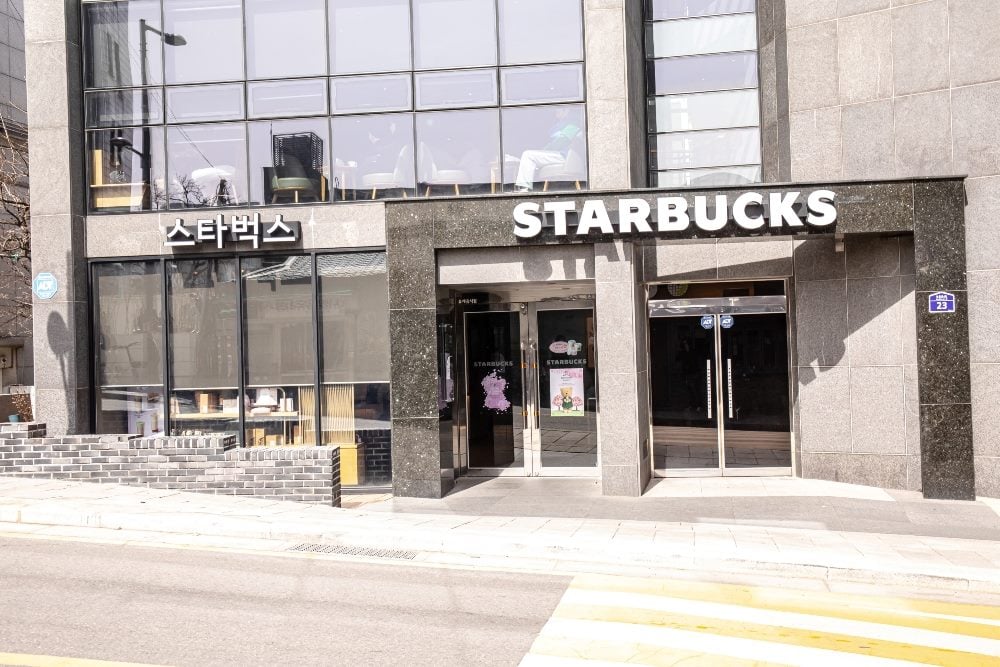
Starbucks learned that the hard way in South Korea. The chain planned to sell a large tumbler it calls a “tank” and named the launch “Tank Day,” scheduling it for May 18. That date marks the anniversary of the 1980 Gwangju crackdown, when the country's former military dictatorship killed or injured hundreds of thousands of pro-democracy activists using troops, tanks and helicopters.
The campaign burned through goodwill that Starbucks had built in Korea since 1999. Public boycotts followed. Government officials weighed in, the local CEO lost his job, and the chairman of the parent company bowed before cameras to apologize twice. President Lee Jae Myung called the episode disgraceful in a post on X.
For any marketer running a global brand, the lesson is direct. Cultural brand risk has become an operational discipline, and it deserves the same rigor marketers already apply to data governance and campaign measurement.
The cost of that kind of misread has a track record. When I looked at the Bud Light crisis, Sara McCord, CEO of McCord Communications, reached for an old marketing adage to explain it: “marketing to everyone is marketing to no one.” Bud Light chased a mass audience with no real conviction behind it.
Starbucks made a different error, treating a product launch as generic when the market it entered carried a very specific history. Both brands paid for ignoring the particular audience in front of them.
This article looks at why cultural missteps carry more weight than they did a decade ago, and what that shift means for how marketing teams build and approve campaigns. We'll cover the pressure culture now puts on brand work, the market forces amplifying that pressure, a pattern drawn from recent brand misfires and the practical steps marketers can take to prepare their teams before the next launch.
Marketers used to make brand decisions inside the building. A logo, a tagline or a product name moved from creative to legal to launch, and customer reaction arrived weeks later in the sales numbers. That timeline has collapsed. Customers now respond in public, in real time and at a global scale that reaches far past the market a campaign was built for.
People have also grown more willing to say what they like and don't like. Reddit hosts entire threads dedicated to picking apart bad ads, and those comment sections work like live sentiment analysis, showing brands exactly which nerve a campaign touched. The Starbucks Korea case moved even faster than that. Within days, protesters gathered outside a store in Gwangju and smashed cups on the ground, and the country's interior minister announced his ministry would stop handing out vouchers from companies that make light of Korean history.
For customer experience, the stakes run deeper than one campaign's numbers. Every brand touchpoint carries the experience a customer has come to expect, and a tone-deaf launch signals to loyal customers that the brand stopped paying attention to them.
That's the reason cultural review now belongs inside the campaign workflow rather than in a post-mortem. The signal isn't always clean, though. One Seoul student told NBC News he'd keep going to Starbucks because the coffee still tastes good. Backlash and customer loyalty can sit side by side, and marketers have to read both at once instead of assuming outrage always means lost customers.
Protesters gathered outside a Gwangju store and smashed cups within days of the launch, while the interior minister moved to cut vouchers to companies that trivialize Korean history.
Related Article: Starbucks Comeback Shows What Happens When Customer Experience Leads Again
Three forces have raised the cost of getting culture wrong. The adoption of digital media has stretched the scale of a bad outcome, making these forces more influential at a faster rate.
The first is values-based buying. Consumers increasingly treat a purchase as a small statement about what they support. eMarketer, drawing on Kearney Consumer Institute data, reported that two in five US consumers boycotted a brand in the past year, and 51% stopped buying from brands that don't align with their values. The same research found that 68% of consumers think brands should voice their values, so staying silent isn't a safe default either. When a product launch reads as an insult to a community's history, it drops straight into that decision.
The second force is how quickly trust erodes once a brand stumbles and reverses course. Gartner found that 55% of consumers lose trust in a brand that reverses its position on a social or political issue, and a third of the consumers who distrust brands for backtracking said they had boycotted one in the past year. That number shapes crisis response. Firing an executive and issuing an apology can steady a situation, and an inconsistent or defensive reversal can make the damage worse. The Bud Light crisis showed how a wavering response turned a single decision into a prolonged loss.
There's a wrinkle concerning the timing when trust begins to erode. Backlash doesn't always show up in the sales numbers right away. eMarketer analysts have noted that controversy can even lift short-term sales while quietly draining brand equity over the longer term. The Seoul student who plans to keep buying coffee fits that pattern. Marketers who declare victory because the register still rings can miss the slower erosion happening underneath.
The third force is the gap between global headquarters and local market context. A brand that operates across borders inherits the history, memory and politics of every market it enters. The Korean campaign compounded its calendar problem with a slogan, “Thwack it on the table,” that many Koreans tied to a 1987 case in which police claimed a tortured student activist had simply died after investigators “hit the desk with a thwack.” A team without deep local knowledge would miss both references. A team with it would have flagged them in minutes.
Protesters gathered outside a Gwangju store and smashed cups within days of the launch, while the interior minister moved to cut vouchers to companies that trivialize Korean history.
The Starbucks case isn't a one-off. Line up recent brand misfires and a pattern comes into focus. Each one began with a creative or product decision that made sense inside the building and then collided with a cultural context the team either didn't see or didn't weigh heavily enough. The table below maps several notable examples against the cultural trigger, how each situation escalated, and the lesson marketers can carry into their own work.
Across very different brands and markets, the same mechanism repeats: an internally sensible decision meets a cultural context the team failed to weigh, and the response often decides whether the damage is contained or extended.
| Brand & Campaign | Cultural Trigger | How It Escalated | Core Lesson |
|---|---|---|---|
| Starbucks 'Tank Day' (2026, South Korea) | Launch date and 'tank' naming evoked the 1980 Gwangju massacre | Boycotts, government rebukes, local CEO fired, two public apologies | Local history is campaign-critical context, not trivia |
| Cracker Barrel logo redesign (2025) | Dropping Uncle Herschel read as erasing heritage customers loved | Stock dip, high-profile criticism, logo reversed within days | Revise symbols tied to outdated norms, not cherished ones |
| Zara 'The Jacket' (2023) | Imagery resembled Gaza war scenes during active conflict | #BoycottZara trended, 110+ complaints filed, campaign pulled | Cultural context and current events belong in QA |
| Bud Light / Anheuser-Busch (2023) | A partnership plus a neutral non-apology satisfied no one | Roughly $27B market value loss and a 30% sales drop | Crisis response needs clarity, not attempts at neutrality |
| Target Pride / DEI campaign (2023) | Pulled LGBTQ+ Pride products after backlash and staff harassment | Loyal inclusion-minded customers felt abandoned, reading the retreat as siding with harassers | Caving to pressure alienates the loyal base you built |
| H&M 'Coolest Monkey' (2018) | Racial insensitivity in the product and model pairing | Celebrity partners cut ties, stock fell sharply | Diverse decision-makers catch harm homogeneous teams miss |
The through-line is a failure to read the room, a phrase I've come back to in earlier looks at marketing misfires. None of these teams set out to offend anyone. Each approved work that looked fine from the inside and landed very differently in the market.
The trigger shifts from case to case, national history in Korea, brand heritage in Tennessee, an active war in the Zara example and the underlying mechanism stays the same. A fairly homogeneous group, working on a compressed timeline, ships a decision without a real check for how it will feel to the people who live inside that culture.
Notice, too, that the response often did more damage than the creative. Cracker Barrel reversed within days and steadied itself, while Bud Light's drawn-out, uncertain response stretched the crisis into months. Target shows the same trap from another angle, pulling Pride products to quiet a backlash and signaling to the loyal customers it had courted that its commitment was negotiable.
Mapping launch dates against local anniversaries, elections and periods of mourning in every market catches problems like Starbucks Korea's Tank Day before a campaign is ever scheduled, at almost no cost to the team.
The following table highlights the most important lessons, actions and strategic considerations emerging from Starbucks Korea's "Tank Day" backlash and what it means for global brand marketers.
| Key Area | What Happened | Why It Matters | Recommended Action |
|---|---|---|---|
| Campaign Timing | Tank Day launch fell on the anniversary of the 1980 Gwangju massacre | Local historical dates carry weight headquarters teams may not see | Map every market's sensitive dates before scheduling launches |
| Crisis Escalation | Boycotts, government rebukes and a fired CEO followed within days | Real-time public reaction now outpaces traditional response timelines | Build sentiment monitoring and response thresholds into the launch plan |
| Local Market Expertise | Neither the "tank" name nor the "thwack" slogan were flagged before launch | Headquarters-only teams miss context locals catch instantly | Route campaigns through a local cultural review gate before approval |
| Trust and Loyalty | Some customers said they'd keep buying despite the controversy | Backlash and loyalty can coexist, masking slower brand equity erosion | Track sentiment and brand equity separately from short-term sales |
| Crisis Response Clarity | Starbucks moved quickly with firings and apologies vs. Bud Light's prolonged, unclear response | A fast, consistent reversal contains damage; hesitation extends it | Pre-approve a crisis response playbook with clear decision owners |
Cultural brand risk can't be erased. Yet, it can be managed the same way marketers handle any other operational risk.
Start by adding a cultural review gate to the approval process. Before a launch, especially in a market outside headquarters, route the creative, the naming, the timing and the imagery through people who live in that market and know its calendar and its history. The Korean campaign would very likely have failed that one check.
Timing deserves a step of its own. Map launch dates against local anniversaries, elections and periods of mourning in every market where the brand operates. Starbucks scheduled “Tank Day” on one of the most sensitive dates in modern Korean history. A shared calendar of sensitive dates per market costs almost nothing and heads off a whole category of mistake.
When you evaluate outside agencies or martech vendors that promise localization, ask pointed questions before signing. Who on your team has lived-market expertise for each region we operate in? How does your review process flag historical or political sensitivity? What's the turnaround for pulling scheduled content when events shift under us? A vendor that can't answer those clearly is a risk on its own. Cultural sensitivity training for the internal team plays the same role, giving people a shared sense of what's simply off-limits.
Plan the response before you need it. Decide in advance which metrics signal a real problem instead of ordinary noise. Share of voice and sentiment analysis can be watched hour by hour in the first days of a controversy, while a measure like Net Promoter Score reads better over a longer window. Set thresholds that separate a passing complaint from a genuine crisis, and rehearse who speaks and in what tone. When a reversal is the right call, make it clear and consistent, because a defensive or half-hearted apology can cost more trust than the original misstep did.
Run small experiments as a habit, not a special occasion. Test names, taglines and imagery with diverse audiences inside each target market before committing to a full rollout. The fix for nearly every misfire above was inexpensive, a review by people who would have caught the problem in a single conversation.
Building that conversation into the workflow costs far less than rebuilding goodwill after it's gone. For customer experience leaders, that's the real takeaway from Starbucks in Korea. Cultural fluency is now part of the product, and the brands that treat it that way spend a lot less time bowing before cameras.
 Learn how you can join our contributor community.

Pierre DeBois is the founder and CEO of Zimana, an analytics services firm that helps organizations achieve improvements in marketing, website development, and business operations. Zimana has provided analysis services using Google Analytics, R Programming, Python, JavaScript and other technologies where data and metrics abide.