Editorial
Research Report
Building the Case for Modern Public Sector Messaging


Summer 2026: The 250th anniversary of our great country AND FIFA’s World Cup?! Best summer ever? I’d argue and emphatic YES!
For me, football (soccer as we like to call it here in America) has been a passion of mine since I could walk. I’m the guy that had both parents who not only played the game but met doing so in college. I’m also the guy that visited Italy four times over the last 14 months to see five matches of a team I follow. I also was the guy who was lucky enough to attend his first World Cup match this year (Netherlands vs. Japan).
So, it would be accurate to say I’ve been raised by the game to some degree, and it's something that is deeply woven into the fabric of who I am (which I happily embraced).
For the uninitiated, every four years the national teams of the top ranked counties come together for the "Super Bowl of soccer," the World Cup. Each time, a different set of countries hold the tournament and this year, the United States, Canada and Mexico play hosts to the world's most popular game, which is now down to eight teams from 48. The final match is set for Sunday, July 19.
It's simply a really, really big deal. Big as in 4.6 million people attended the first 72 games of the tournament.
However, for the first time ever, this year looks different than previous World Cup tournaments. Typically, the tournament hosts 32 teams, which each play in a four-country group stage, where the top two teams advance to a knockout round, a one-match game where the winner advances (think NCAA March Madness brackets).
But this year, there are 48 teams instead of the traditional 32, where third-place teams in the group stage can advance, and where countries must survive an additional knockout round. This adds more drama, more surprises and much more risk for upsets and action-packed matches.
We have already witnessed our share of eye-opening, mouth-dropping excitement. Some of the world’s top ranked powerhouse teams have been eliminated. Brazil, Germany, Netherlands and Portugal have all had their World Cup dreams slashed early in the tournament. Cabo Verde, the No. 61-ranked team in the world, almost beat world power and defending champs Argentina (No. 2 in the world) in the knockout round after becoming a fan favorite with ties against other world powers Spain and Uruguay.
Not only that, but the matches have also been INCREDIBLE. From Argentina's Lionel Messi leading the tournament with goals (and becoming the all-time leading World Cup goal-scorer), to teams like Iraq giving top teams scares, to Norway knocking off Brazil and England and Mexico playing an all-time classic in Mexico City – there’s been no shortage of legendary memories and excitement. And don't forget the last World Cup for one of soccer's legends: Portugal's Cristiano Ronaldo.
All of which brings me to the question that I believe I have the answer to: Why?
Why did FIFA (Fédération Internationale de Football Association) add 12 more teams? Why were some 3rd place group stage teams given the ability to advance when they never have? Why is there now a round of 32 knockout matches?
The answer to me is quite simple, but holds a duality that needs to be explored: Market expansion vs. experience dilution.
In simplistic terms, FIFA aims to grow the game globally. By adding in new countries to the mix, it births the opportunity for new fans, new players and new markets that ultimately will grow the game and inspire new demographics and sponsors. Simple, to the point and smart business tactics.
On the other hand, they must keep a close eye on experience dilution. Legacy fans may experience higher prices, lines and accessibility challenges. Additionally, we can’t overlook challenges to the players. More games = higher risk of injury.
With all of that said, I tend to lean towards the side of embracing the additional teams in the spirit of growing the game. I also believe this mentality can provide three key lessons for brands (a hat trick if you will) to support elevated customer experience and sustained growth into new markets.
Here are those three key areas:
As I’ve covered many times in the past, the key to exceptional customer experience is emotion. Creating events, opportunities and experiences that let customers feel. That feeling is what humans chase. We seek to find it again and again.
For the World Cup, new teams produce the opportunity for upsets, which creates drama, which in turn transforms into excitement that can be felt as emotion. The thrill of the unknown, the chance to witness history and the belief that your country has what it takes. All of this creates a wonderful euphoric wave that steals the hearts and minds of spectators, something all brands should take a page out of.
Build a room full of emotions for your customers, then open the door for them and let them in.
Related Article: The World Cup Playbook Every Marketer Should Steal
The game of football only grows when new generations decide to go outside, kick a ball and mimic their favorite players. For FIFA, adding 16 new countries provides that exact opportunity. Though some of the newly added teams didn’t make it through group stage, their mission was still accomplished.
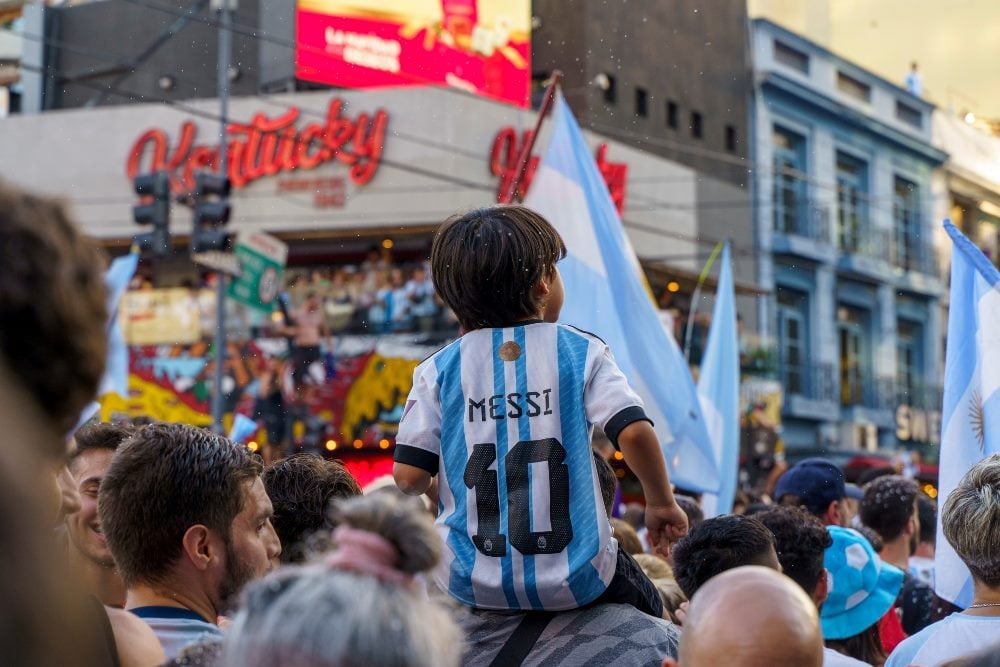
Cabo Verde, Curaçao, Jordan and Uzbekistan all qualified for the tournament for the very first time. If you’re a little boy or girl in that country, seeing your flag on the big screen or in person is life-changing. A moment and memory that will stay with you forever.
The same holds true with brands, and I’m the perfect example. I’ve talked before about my relationship with Porsche as a brand, and how as a kid I experienced the brand through driving with my father.
We often forget that brand relationships can be passed down and experienced through generations. While my experience may not be exactly the same as my father's experience, the brand is a conduit for the connection and emotion.
Brands must find ways to sell the moment in time, not the product. It’s about creating opportunities for experiences to be lived, then re-lived later.
The following table highlights the most important lessons, actions and strategic considerations emerging from FIFA's 48-team World Cup expansion and its parallels to customer experience strategy.
| Key Area | What Happened | Why It Matters | Recommended Action |
|---|---|---|---|
| Market expansion | FIFA expanded from 32 to 48 teams, adding new markets like Cabo Verde, Curaçao, Jordan and Uzbekistan | Growth into new markets creates first-time fans and brand advocates, but risks diluting the experience for legacy audiences | Balance new-market investment with protecting core-customer experience quality |
| Emotional engagement | More teams and upsets (Brazil, Germany, Netherlands, Portugal eliminated) increased drama | Emotion, not information, drives customer loyalty and repeat engagement | Design moments of surprise or stakes into the customer journey, not just efficiency |
| Generational loyalty | First-time qualifiers gave young fans a moment tied to national identity | Brand relationships are often inherited across generations through shared experience | Create experiences customers want to pass on, not just transact on |
| Experience economy | Fans value the feeling of the event as much as the outcome | The process of obtaining a product is as valuable as the product itself | Audit customer touchpoints for feeling, not just function |
At its core, the World Cup is a spectacle of the highest stage. An event so big globally, that it can be felt just as much through TV as in person. From fans in bars cheering, to families attending matches, there is no question that this event is about the experiences it yields for today, and the memories it creates for tomorrow.
What is the price of experience? Is there an apex? These questions don’t need answers; instead, they provide a compass and guiding light to always ask yourself and your brand.
What experiences do our customers want? Where does great experience end?
Like the World Cup, brands need to lean into the true power of experience. A product is fleeting, but how that product — and even more importantly, how the process of obtaining that product makes consumers feel — is far more valuable to invest in. And, in my opinion, it is where brands should focus for experience equity and the opportunity to win customers hearts, not just their wallets.
Try this: look through photos on your phone, go back in time if you will. Pick out a memory that you enjoyed. How does it make you feel?
Now, close your eyes and think of the same memory. Focus on the time of day, the smells in the air, where you are and what you see. I'd wager your eyes-closed memory feels more real, more intense and layered with years of emotional experience.
It’s that feeling that the World Cup provides to fans around the world. The feeling of “maybe we can win it all." The feeling of where you were, on that day, when your team won against all odds.
A feeling we as humans seek in all aspects of our life, that makes life so bright and worth participating in. This is the feeling brands can create, can curate and can crystalize for their customers for generations to come. A feeling that is more than a product, more than a transaction.
Or, as the legendary Italian footballer Francesco Totti once said, “Playing football with your feet is one thing, but playing football with your heart is another.”
Put the heart first. The feet will follow.
 Learn how you can join our contributor community.

Justin Racine is Chief Digital Officer at Geriatric Medical & Surgical Supply, focused on building digital technology that elevates customer experiences through AI, design and unified processes. Previous to that he was AVP, Commerce Strategy at Perficient, a global digital consulting firm where he drove digital commerce strategies that assisted Fortune 500 brands to achieve and exceed business goals through commerce-enabled technologies.