Editorial
Research Report
Building the Case for Modern Public Sector Messaging


LAS VEGAS — By now, we’ve all seen the demo where an agent takes a one-line brief and hands back a finished campaign in matter of minutes. It is impactful the first time you see it, but upon more reflection it leaves a few open questions.
First, what does all of this cost at scale, and what mechanisms are in place to keep things from going off the rails?
PegaWorld 2026 spent three days at the MGM Grand in Las Vegas on exactly those questions.
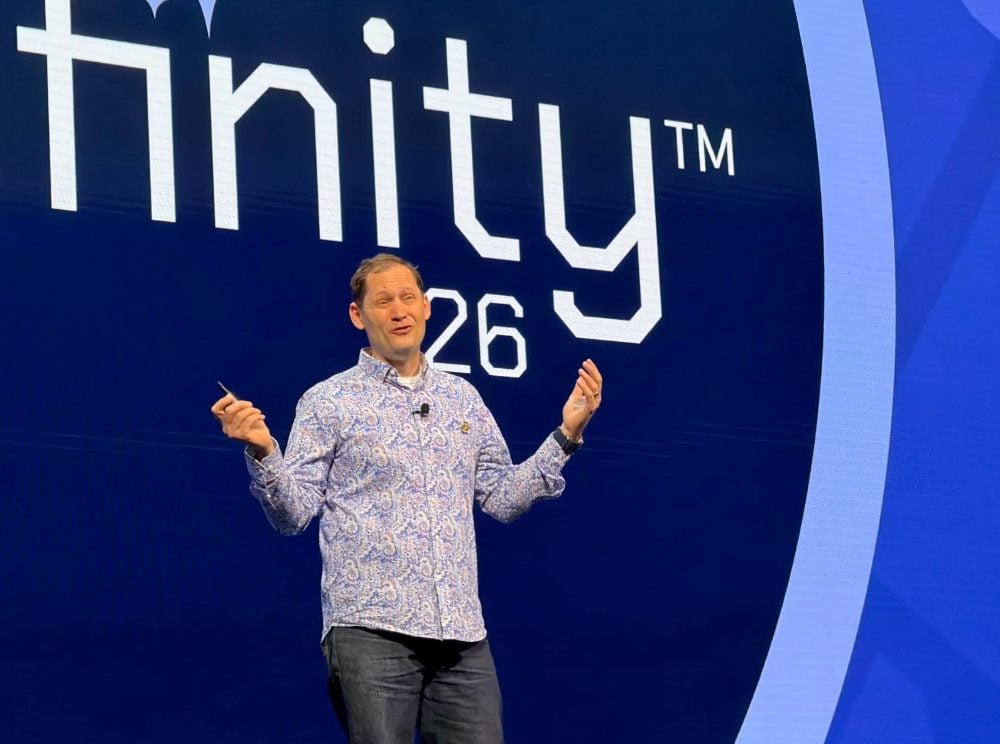
Don Schuerman, Pega's CTO and head of marketing, opened by calling it "a pragmatic couple of days," a jab at the noise the rest of the industry has been making about AI. It was differentiated positioning, and the conference’s announcements backed it up. They clustered around four pressures every enterprise is feeling: cost, trust, the org chart and the aging systems which so much of the enterprise still runs on.
The cost story ran through nearly every session. Pega has a name for the problem now: the "AI token tax." Metered pricing climbs with every reasoning step an agent takes, and the longer the reasoning chain, the more often the answer comes back wrong.
Kerim Akgonul, Pega's chief product officer, put the corrective simply by saying, "the question isn't whether or not we're going to use AI. The question is, how do we use AI to make things simpler and not more complicated?" Plenty of companies are still handing AI tools to their people and waiting for magic. The smarter ones use a specific kind of AI in a specific place and leave the rest alone.
While the onus for responsible usage of AI tends to fall solely on the consumer of those AI tools, Pega’s approach is unique in that it also puts some of the responsibility back on the provider.
Pega's answer is architectural, and it starts with the habit Akgonul is describing. Too many teams pay an LLM to re-reason work that was already reasoned once. Pega front-loads the heavy AI-based reasoning to design time, while you're still building the workflow, and when big changes have fewer downstream impacts. This “shift left” approach has many benefits, but a big one is token cost.
Then, at runtime, when the agent is handling millions of request at scale, it switches to a lighter semantic query. This means the system really only needs to reason once, then it is able to simply run. Pricing for this approach follows the same logic: clients pay per completed case, per order changed, or per claim filed, no matter how much AI ran underneath. Pega's calculator advertises savings north of 20x at high volume. It's a best-case number, and worth reading as one.
Pega CEO Alan Trefler accurately named the end of the era of "tokenmaxxing," which has been caused by runaway AI usage and poor habits by platforms and processes to use the right tool for the job at hand. Enterprises, he argued, should instead be buying "predictable outcomes with predictable costs."
Gartner expects more than 40% of agentic AI projects to be scrapped by the end of 2027. Cost sits at the top of the kill list.
Despite the cost of tokens, generating output at scale is still relatively cheap and extremely easy. Whether you can trust it within a regulated workflow is what still costs you. Pega cited its research with Savanta, which put the defect rate of AI-generated code at roughly 1.7x that of human-written code. Tolerable in a prototype, but in a claims system that pays out disability benefits, every one of those defects has a tangible impact on a real person.
Wells Fargo's marketing leaders walked through their own agentic transformation on the Day 2 mainstage, and the numbers explain the urgency.
Giles Richardson, the bank's EVP of marketing strategy and delivery, pegged the operation at almost 6 billion customer interactions a month. Scale was the easy part.
"This is not just a question of scale; it's a question of relevance," he said. "If we do this well, we can deepen the relationship with the customers."
Rob Walker, Pega's VP of decision management and analytics, named the bind that creates. "To be relevant in the moment, you need a lot of options. And you have to balance that with the fact that the process has to be repeatable and auditable."
This is where the newly-announced Customer Engagement Studio comes in, with agents spinning up creative ideas and offers faster than any team could manually, and accountability for the next best action guided by strict governance (and human review where needed) before it reaches a customer. This stands in contrast to a campaign whose creative might have been completed in a few minutes, only to sit for two weeks in an approval queue. This lets compliance function as needed while enabling the marketing and CX teams to move at speed.
There's a reason Pega keeps repeating the word "predictable." Connect an agent through Pega, and it follows a pre-approved workflow instead of re-reasoning the job on every request—same reason: once an idea from the cost section, now pointed at consistency. You get the same answer twice, which may sound trivial until you consider how many agent demos can't handle it.
Schuerman described what that looks like at run time. The system pulls in agents "only when we need them, without token-burning," and that "not only works faster, it creates better results." To do this, Pega added support for the open Model Context Protocol, so agents built on Anthropic Claude, Google Gemini, OpenAI and AWS AgentCore can call governed Pega workflows directly. Gartner expects 60% of brands to be using agentic AI for 1:1 interactions by 2028, ready or not.
Related Article: Agentic Customer Experience: The CX Architecture Built for the World Customers Actually Live In
Pega ran a study with Savanta across more than 500 business and IT leaders who'd already shipped agentic AI. One number stood out. Of the ones who succeeded, 96% had reworked their existing processes before the tech went in, and 53% described the rework as significant. The technology mattered less than the willingness to rebuild the process around it.
Marcia Osborne, senior marketing executive in Wells Fargo's consumer banking and lending group, offered a candid assessment about why the old setup broke.
"Our traditional factory model of marketing would not scale," she said. "Relying on AI agents to help construct those individual parts gave us the velocity unlock."
The change ran in that order. They tore down the workflow first, and the agents accelerated the replacement.
So Pega built a program to address the gap: the Solution Designer Initiative, a free, credential-based training for the people who translate a business brief into something a developer can actually build. The results it claims for its Blueprint Delivered method are the kind of thing marketing ops dreams about. Discovery moves 50% faster. Four out of five projects reach production within 90 days. Rework falls by about a third — the number a marketing ops lead will actually feel.
Pega's tagline for the whole thing is that AI amplifies people rather than replacing them, the line every vendor delivers. The survey gives it some teeth. When respondents named what was holding them back, 77% pointed to a lack of resources and 75% to a basic shortage of understanding of what agentic AI does. The bottleneck is people, and it shows up on the org chart well before it shows up in the budget.
All of this agentic AI modernization fails to reach a customer if the backbone of most transactions is still running on a 40-year-old mainframe.
Shelia Anderson, Unum's chief information and data officer, posed the dilemma to an opening keynote crowd as the question every regulated enterprise is quietly carrying: "How do we modernize without disrupting the service, and without staying multiple years in implementation mode where the payoff won't be there soon?" Her team has booked real wins. She was also candid that the job isn't close to done.
Pega and AWS aimed straight at that gap at the show. Pega Blueprint AI now plugs into AWS Transform. The AWS side reads the decades-old COBOL and writes down the business rules buried inside it. Blueprint AI takes that and generates a modern, cloud-ready design. The familiar alternative is lift-and-shift: move the same slow process to the cloud and start paying monthly for the privilege. Pega is giving it away in AWS Transform, which tells you how much it wants to own the mainframe exit.
Editor's note: PegaWorld 2026 focused less on AI hype and more on the operational realities of scaling agentic AI. These are the lessons enterprise leaders should take away as they evaluate cost, governance, talent and modernization strategies.
| Strategic Issue | What Pega Is Arguing | What Leaders Should Do |
|---|---|---|
| AI Cost Management | Unlimited AI reasoning creates an expensive "token tax" that can undermine ROI at scale. | Model production costs early and evaluate pricing based on business outcomes, not AI consumption alone. |
| Governance and Trust | Repeatable, governed workflows outperform autonomous systems that generate inconsistent results. | Establish approval checkpoints, audit trails and clear accountability before deploying AI into customer-facing processes. |
| Agentic AI Deployment | Successful organizations redesign processes before introducing agents. | Identify broken workflows and re-engineer them before layering AI on top. |
| Marketing Personalization | AI can generate more relevant customer experiences only when governance and scale coexist. | Balance speed with compliance by embedding review processes into AI-driven campaigns. |
| Skills and Talent | The biggest obstacle to agentic AI adoption is often organizational capability, not technology. | Invest in business-technology translators who can convert requirements into executable designs. |
| Legacy Modernization | Mainframe and legacy systems remain a major bottleneck to AI transformation. | Prioritize modernization initiatives that expose business logic and accelerate migration to cloud-native architectures. |
| AI Investment Decisions | Many agentic AI projects will fail because enterprises underestimate costs and complexity. | Define success metrics, governance standards and ROI expectations before launching pilots. |
Even if you didn’t make it to PegaWorld, these takeaways still apply, though how some of these are handled will depend on your tech stack. Here are a few things to settle before you greenlight the next agentic project:
Let’s go back to the topic of AI costs. When the token bill arrives, there needs to be greater justification that a blanket “AI mandate” because at the end of the day, the stakeholders, board members and even shareholders are going to understand what the ROI on that AI usage was. The pragmatic case Schuerman opened with reduces to one demand: have the answers ready before the pilot starts. Reason it through once, up front, and the rest runs predictably.
While it may be hard to say exactly what the conversation will be a year from now at PegaWorld 2027, I can assure you, we will be hearing plenty of feedback around AI cost models, legacy tech modernization and agentic AI pilots in the meantime.
 Learn how you can join our contributor community.

Greg is a best-selling author, speaker, and entrepreneur. He has worked with some of the world’s leading organizations on customer experience, employee experience, and digital transformation initiatives, both before and after selling his award-winning digital experience agency in 2017.