News
Guide
8 CX Survey Templates Built to Get Answers, Not Just Scores

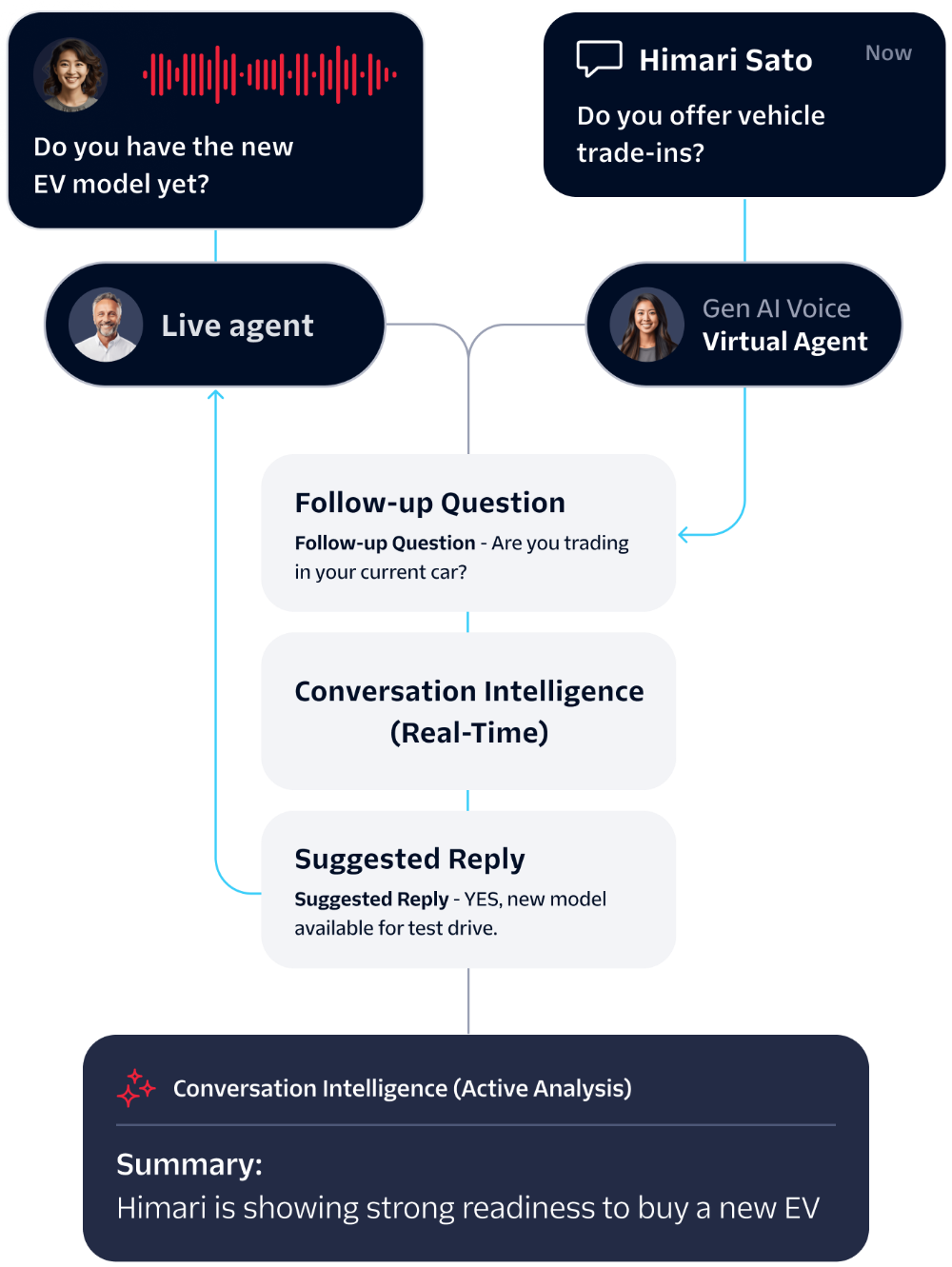
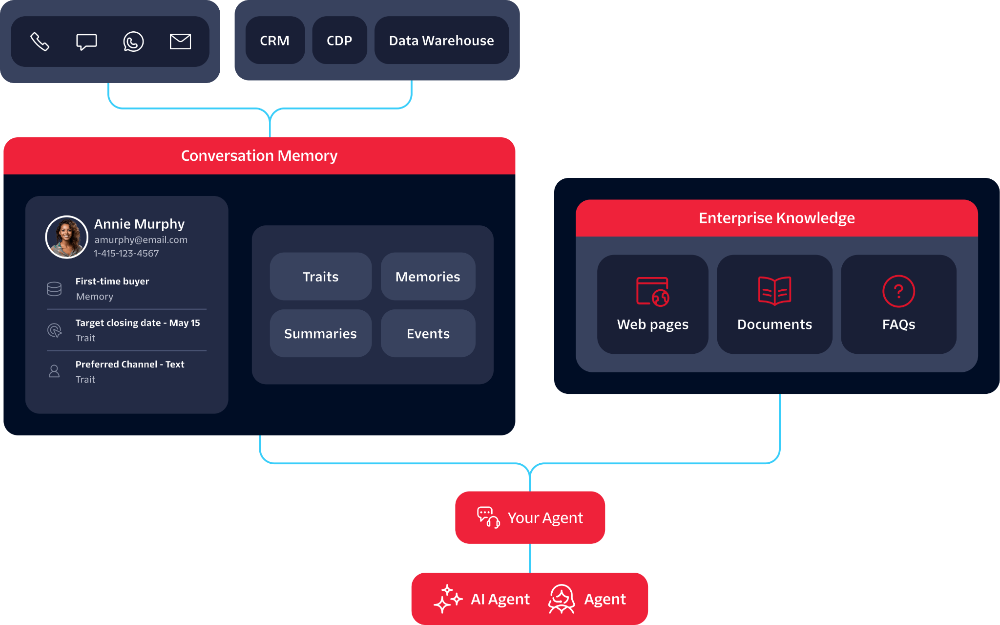
Twilio kicked off its SIGNAL conference in San Francisco Wednesday, May 6 with what CEO Khozema Shipchandler previewed on the company's Q1 2026 earnings call as "the most consequential innovations in our company's history" — a next-generation platform built for the agentic era that the company says will make customer conversations persistent, contextual and continuous across every channel.
All four core platform capabilities are generally available as of today: Conversation Memory, Conversation Orchestrator, Conversation Intelligence and Agent Connect.
The platform announcement is anchored around a familiar friction point in enterprise CX: customers who explain their issue on chat, then repeat the same explanation on a call with an agent who has no knowledge of what came before. Twilio's pitch is that its infrastructure layer eliminates that dynamic — not by fixing a single channel, but by maintaining context across all of them.
"Most brands still treat every conversation with a customer like it's the very first one," said Inbal Shani, chief product officer and head of R&D at Twilio. "Twilio is changing that at the infrastructure layer, so every business built on Twilio can remember, learn, and respond like they actually know their customers."
The capabilities are designed to serve human agents, AI agents and the handoffs between them — a recognition that in the agentic era, the infrastructure layer has to accommodate both without privileging one over the other.
Here's what Twilio announced specifically:
Twilio is also launching a redesigned console and a new developer workspace called Workbench, with an integrated AI assistant for real-time support.
Additional announcements include Twilio Email, now generally available — a developer-friendly email product built on SendGrid technology for teams adding email to cross-channel workflows. Twilio is clear that this does not replace SendGrid, which remains the company's dedicated platform for high-volume transactional and marketing email. Voice AI updates include PCI-compliant voice workflows, native integration of Deepgram's Flux speech-to-text model for smart turn detection, and new programmatic API access to latency and quality analytics. Data Residency for SMS EU enters public beta, and Apple Messages for Business provider support enters private beta.
Omdia Principal Analyst Mila D'Antonio positioned the announcement as a convergence play — calling Twilio a platform operating at the intersection of CPaaS, CCaaS, CDP and AI, and said the combination "solidifies Twilio's place at the top of the category."
And, theCUBE Research Principal Analyst Paul Nashawaty framed the infrastructure layer as increasingly critical as conversational AI scales, citing figures suggesting 85% of consumers have interacted with AI agents in recent months and 68% expect seamless, consistent experiences across channels.
The platform has been in private beta since January 2026, with early implementations reported by Centerfield, Car Finance 247, and Constellation Dealerships. Twilio partners including Apply Digital, AWS, Blacc Spot, Ciptex, and Zennify participated in the enablement program.
Twilio's Q1 2026 results — reported last week — provided the runway for the launch. Voice channel revenue grew 20% year-over-year, marking the sixth consecutive quarter of accelerated growth, with AI cited as a primary driver. Shipchandler told investors the Signal announcements would represent the company's most significant product moment. CX leaders evaluating the platform will now be measuring that claim against what's actually shipping.
SIGNAL runs May 6–7 in San Francisco. Keynote speakers include executives from Nestlé, Rivian, the PGA of America, Stripe, and United Way, along with Sierra AI Co-Founder and CEO Bret Taylor and CrunchLabs founder Mark Rober.
What's been going on the last year with the San Francisco-based provider? Twilio is consolidating its position in enterprise customer engagement through a series of product launches and infrastructure upgrades aimed at unifying communications, data and intelligence across customer touchpoints.
The company reported Q1 2026 results showing voice revenue growth of 20% year over year—its fastest rate in five years. According to company officials, this acceleration stems from AI-driven use cases transitioning from pilot programs to production environments, particularly in customer service and sales operations.
Twilio also noted a 29% increase in multi-product customer adoption as organizations move to consolidate fragmented vendor stacks onto unified communications infrastructure. The company processed over 2.5 trillion interactions in 2025 while maintaining 99.999% API availability.
In April, Twilio launched a modular Flex SDK that allows enterprises to embed contact center capabilities directly into web applications and CRM systems. The company also introduced a Salesforce Voice integration supporting a bring-your-own-telephony model.
According to Twilio, the new user-plus-usage pricing structure aims to help organizations scale AI-powered contact centers without traditional seat-based contract constraints.
Twilio became the only CPaaS provider with direct 10DLC and toll-free connections across all major US and Canadian carriers in March. The company asserts this infrastructure provides faster onboarding, improved reliability and a more secure, compliant messaging ecosystem.
Last October, Twilio expanded its Segment CDP platform with features designed to help data teams manage customer information more reliably. The updates include:
According to company officials, these capabilities aim to help enterprises build trusted, real-time customer experiences while ensuring data reliability across the customer journey.
 Have a tip to share with our editorial team? Drop us a line:
Dom Nicastro is editor-in-chief of CMSWire and an award-winning journalist with a passion for technology, customer experience and marketing. With more than 20 years of experience, he has written for various publications, like the Gloucester Daily Times and Boston Magazine. He has a proven track record of delivering high-quality, informative, and engaging content to his readers. Dom works tirelessly to stay up-to-date with the latest trends in the industry to provide readers with accurate, trustworthy information to help them make informed decisions. Connect with Dom Nicastro: 