News
Research Report
Building the Case for Modern Public Sector Messaging
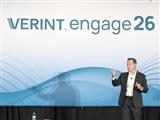

Verint on June 23 unveiled three agentic AI capabilities — Workforce Intelligence, Desktop Intelligence and Quality Intelligence — at its Engage 2026 conference in Las Vegas. The features, built on Verint Agent Factory, aim to help contact centers manage, measure and improve work across human and AI agents, according to company officials.
The capabilities address a longstanding gap in contact center operations: organizations could analyze conversations but had limited visibility into what agents did across systems and workflows. Verint said the new tools connect insight into agent behavior with the processes that drive stronger outcomes.
Verint also announced Agent Factory today at Engage 2026. The AI orchestration environment lets enterprises build, configure and manage workforces that blend human and AI agents within the company's CX Automation Platform.
The launch targets a gap according to Verint: many organizations are still stitching together fragmented AI point solutions rather than running coordinated, production-ready workflows. Agent Factory provides a composable environment where companies can deploy prebuilt AI agents, create custom ones and route work to human staff when needed.
"Customers can build their own agentic AI agents, use them alongside Verint AI agents and route work to humans when needed. The result is a more coordinated workforce focused on outcomes you can measure, not just capabilities you can demo," Jaime Meritt, chief product officer at Verint, said in a release.
Verint CEO Dave Rhodes told CMSWire in an interview last week the Engage 2026 announcements reflect a deliberate strategy of incremental, provable ROI rather than sweeping platform promises.
"We've got a couple of announcements that in a lot of ways are more repositioning of technology that we've had in place, and it's deployed in production and generating hundreds of millions of dollars of revenue," Rhodes said. "... It's noisy out there, and we want to make sure our signal to noise ratio is appropriate relative to our impact in the industry."
Rhodes framed the company's go-to-market approach around measured deployment.
"Start with modest practical outcomes that you're trying to achieve," he said. "Look at your tool belt and use the right tool for the right job. Hammer the nail in flush and cleanly, improve the ROI, and then add on a second thing, and a third thing, and a fourth thing."
Verint officials said Agent Factory offers the following capabilities:
| Capability | Description |
|---|---|
| Design, Build & Orchestrate | Prebuilt and custom AI agents with human handoff routing |
| Prompt Management | Centralized controls for governing prompts across AI agents |
| Model Flexibility | Multiple AI models, including bring-your-own-model support |
| Data Connectivity & Governance | Integrated governance controls across the CX Automation Platform |
The three capabilities target distinct layers of contact center operations:
Capability | Description |
|---|---|
Workforce Intelligence | Real-time staffing controls across Verint's full WFM portfolio |
Desktop Intelligence | Captures desktop activity across systems, converting it into AI-ready structured data |
Quality Intelligence | Connects agent speech with system actions to flag outcome discrepancies |
Rhodes said the traditional quality assurance model — analysts reviewing a fraction of interactions — is no longer viable at scale.
"The traditional approach of having an army of quality analysts in a room somewhere, either here or overseas, analyzing transcripts, needle in a haystack, half a percent, maybe 3% of all the interactions, and trying to determine what's actually going on, writ large in the CX space — those days are gone," he said.
The new Quality Intelligence capability now prosecutes every interaction automatically. Rhodes said a key acquisition two years ago — a Bay Area company specializing in natural language processing — accelerated the build. The result is what Verint calls conversation intelligence, which informs workforce strategy: matching agents to interactions, identifying digital deflection opportunities and surfacing coaching and upskilling needs.
Related Article: Verint Adopts Unified Brand After Calabrio Merger
Rhodes said Desktop Intelligence represents a maturation of real-time agent assist technology that was once too clunky to deliver on its promise. He pointed to his early board experience at Cresta as context.
"Real-time agent assist was really clunky," he said. "The people that needed it the most were scared of it, because it really wasn't working in real time. It was multiple seconds delayed, and often error prone."
That has changed. Rhodes said the capability now runs across multiple languages with accurate knowledge management and practical dashboarding. "The desktop intelligence is actually real now, and it's practical and working," he said. "... The technology has finally caught up."
Dave Singer, Verint's global VP of go-to-market, identified Desktop Intelligence as the announcement most likely to resonate on the conference floor this week in Vegas.
"The ability to extract the level of insight from unstructured activity data is groundbreaking," Singer said. "... It's what everybody's been asking for. It's completely differentiated from what everyone else is doing."
Singer said accuracy is engineered into the quality layer through configurable guardrails and required explanations.
"You put in the explanation in the form itself — what do I mean by this question? What should be good? What should be bad?" Singer said. "So those guardrails are humans define what good looks like."
Singer said explainability is non-negotiable. "Not only does our quality score what's happening, but it tells you why it's scored it that way," he said. "So now if the explanation for why its score feels off, you can dive in."
Singer said customer conversations are increasingly pushing away from point solutions toward platform-level integration. Vendor A for real-time coaching and Vendor B for post-call analytics end Vendor C for workforce management and Vendor D for my IVA? Not the best playbook any longer, he said.
Singer described a compounding data model where each capability feeds the next.
"Every piece informs the other, and as we introduce more and more stuff that does real-time analytics and coaching, post-call analytics, activity analytics — everyone informs the next and makes it stronger," he said. "So instead of compounding errors, you're compounding accuracy."
Rhodes added that openness remains a differentiator. Verint supports bring-your-own telephony, transcription engines and LLMs.
"We're an open system," he said. "We work with literally any telephony provider on the planet."
Thoma Bravo completed its $2 billion all-cash acquisition of Verint Systems on Nov. 26, 2025, one of the largest contact center as a service software buyouts of the year. At closing, Verint merged with Thoma Bravo portfolio company Calabrio, a workforce engagement management provider, with the combined entity adopting the unified Verint brand on Feb. 18.
Thoma Bravo is targeting a CX automation market it values at more than $50 billion, and its portfolio now consolidates Verint, Calabrio, Medallia and Aisera under one owner — a concentration that reflects broader consolidation in AI-driven contact center technology.
Leadership shifted swiftly post-close. Former Calabrio chief Rhodes was named permanent CEO on Feb. 24, completing the transition for an organization that serves more than 80 of the Fortune 100. Verint reported AI ARR of $372 million as of Q2 FYE 2026, up 21.2% year-over-year, on total revenue of $208 million.
Agentic AI orchestration is shifting from pilots to production in enterprise customer experience, delivering measurable gains in productivity, cost savings and compliance.
Unlike traditional chatbots, agentic systems reason, plan and execute multi-step tasks independently across enterprise platforms. Governed orchestration — which constrains AI behavior through business logic and real-time monitoring — is emerging as the architecture baseline.
Key capabilities now running natively within these platforms include:
The model is shifting from human-assisted AI to AI-powered human workflows. AI handles routine, data-driven tasks — which consume over 50% of contact center workers' time — while humans focus on complex cases requiring empathy and judgment.
Structured human handoffs remain important in regulated sectors, minimizing compliance risk under frameworks such as the EU AI Act.
Verint, founded in 1994 and headquartered in Melville, N.Y., provides customer experience automation software for mid-size to large enterprises. The company serves more than 10,000 organizations in over 175 countries.
 Have a tip to share with our editorial team? Drop us a line: