Feature
Research Report
Building the Case for Modern Public Sector Messaging

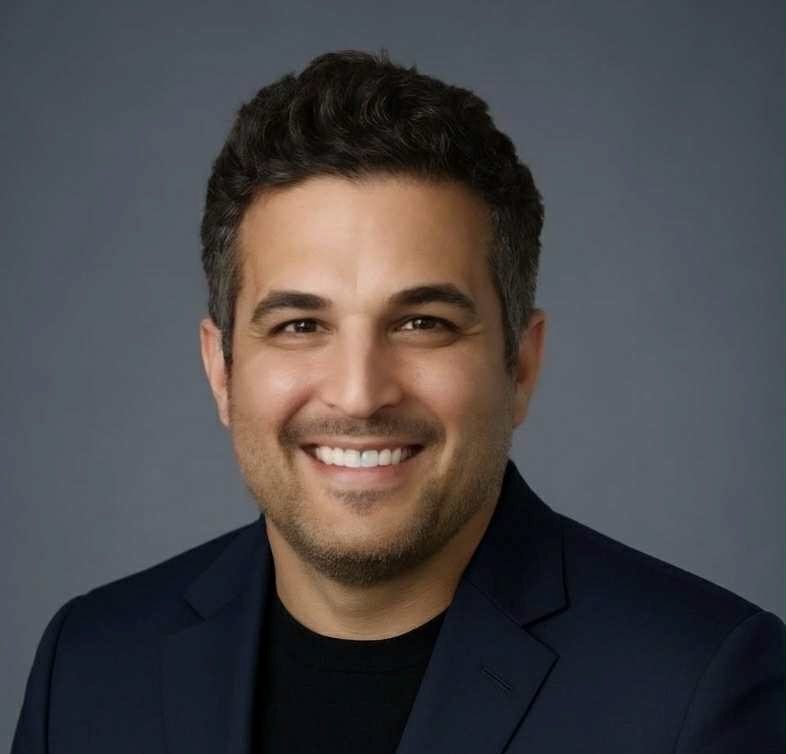
LAS VEGAS — Jairus Mitchell has a title problem. He manages what Red Hat calls "content findability" — a deliberately broad umbrella that swallows SEO, GEO, AEO and whatever new acronym the industry invents next. The nomenclature keeps shifting. His job doesn't.
"A lot of people in the field are having a crisis of faith right now," said Mitchell, speaking for himself and not for Red Hat, which provides enterprise open-source software solutions. "We're used to making the number go up and to the right. And now we're watching it go flat — at best."
He is not alone. Dave Wallace has spent more than a decade tuning the web presence of AdvancedMD, a medical office software company serving independent practices. He knows his analytics cold. And what he's been watching over the last several months has not been encouraging. Organic traffic has cratered. AI-referred sessions sit below 1%.
He thinks about it. Every day.
"We've seen it just go down," Wallace said of organic traffic. "And we assume it's because of AI."
Mitchell and Wallace are living the same disruption that gripped conversations at the Adobe Summit 2026 at the Venetian Resort in Las Vegas last week — a gathering where vendors, practitioners and analysts wrestled with one of the most pressing questions for marketers and digital customer experience professionals today: How do you get your brand discovered in an era where AI is increasingly the first stop for buyers, and where showing up doesn't guarantee a click?
The terrain has a new name — Answer Engine Optimization, or AEO — and it sits alongside the older GEO (Generative Engine Optimization) and the now-venerable SEO in a crowded field of competing frameworks. The underlying question is simpler and more urgent: when a customer types a question into ChatGPT, Google Gemini or Perplexity, is your brand part of the answer?
That question was as much a part of the Adobe Summit as nicotine in the casino hallways attendees navigated between sessions. In the exhibition arena. On the keynote stage. In sessions. And over snacks and drinks.
AEO. AEO. AEO.
The data says this topic is not optional. Gartner predicted that traditional search engine volume will drop 25% by 2026, with AI chatbots and virtual agents displacing queries that previously went to traditional search engines.
Meanwhile, the 2026 HubSpot State of Marketing report found that 58% of marketers say visitors referred by AI tools convert at higher rates than traditional organic traffic.
And Conductor's research across more than 13,000 enterprise domains found that AI-referred sessions grew 527% year-over-year — while converting at 4.4 times the rate of traditional organic search.
Volume is low. Growth is explosive. Conversion quality is high. And most brands are still figuring out what to do about any of it.
Related Article: An AEO Content Strategy With Actual Results
So we went to Vegas last week to try to figure it all out. Sure, AEO wasn't the only topic. But AI was.
Adobe's pivot from "digital experience" to "customer experience orchestration" was certainly front and center. The gotcha there: agentic CX orchestration will help brands win and help marketers get work done, and it's something backed by the $5.26 trillion CEO on stage with Adobe CEO Shantanu Narayen last week.
But let's go back to the ground floor, where practitioners like Wallace, the senior web designer and analyst at AdvancedMD, and a careful observer of his own traffic data, are coping with sinking organic traffic. When organic began declining, the company did what many do: hired a contractor to help with AEO strategy. The advice they got back was a common playbook: add FAQs, build a presence on Reddit, edit Wikipedia to improve third-party citations.
"We haven't seen any increase," Wallace said. "We've actually seen a decrease in the last three months. Like, cratered."
He suspects the AI disruption, not the company's recent WordPress upgrade, is the culprit. His AI referral traffic isn't moving. And when he looks at his analytics, the question he asks daily hangs unanswered: why?
Wallace also raised a question that sits at the heart of the AEO debate. Even if a brand earns a citation inside an AI-generated answer, does that translate into a visit? Are they going to click through; aka, convert?
"They're not," he said of AI users. "That's what I've seen because I do the metrics on the website."
The click-through anxiety is real. While Adobe and others were doing their fair share of "brand visibility" posturing when it comes to answer engines, isn't it better to be "brand visited" rather than just "visible"?
It's like Google impressions. Impressive, but just a signal you've got passersby and not actual interest. They may look at the pair of jeans but don't buy them.
Reality: AI citations are small, often buried, and users have little incentive to leave a platform that has already synthesized the answer they needed. A session at Adobe Summit put the challenge in stark terms, Wallace noted: "You're no longer selling to audiences. You're selling to machines. The machines tell them what to buy."

Mitchell arrived at a similar place from a different direction. At Red Hat, his team runs a multi-disciplinary operation — technical SEOs, content strategists, analysts, data scientists — and they've done extensive analysis on AI-referred conversion performance. For a company selling enterprise server software with multi-year sales cycles, the results are nuanced.
"When we look at earlier-stage conversions — inquiry, contact-level stuff — we're seeing it on par with organic search and direct entry," Mitchell said. "Everything's better than paid. But all the unpaid stuff is kind of being bucketed together."
He's also skeptical of the land rush he sees around AEO tooling and strategy.
"There are a lot of people trying to sell pickaxes," he said. "A lot of people trying to sell a plot of land. I would urge your audience to use skepticism and understand what people are trying to sell them when they engage with these messages."
And on the question of whether AEO requires a fundamentally different approach from SEO, his answer was blunt: "I would tell someone to collapse it down into one page. Why are we sprawling like that? I don't think it would be that different."
Mitchell also pushed back on one of the more persistent myths circulating in AEO circles — that brands need entirely new technical infrastructure to succeed in AI search. The reality, he argued, is that the transformer models powering today's answer engines have older roots than the vendor pitches suggest.
"All of this transformer stuff came out of BERT," he said, "which was what Google was using to understand what web pages are about." In other words, the technical signals that made content discoverable in traditional search — structured data, schema markup, templatization, clean indexing — are largely the same signals AI systems use to evaluate and cite content today.
His team has rebranded that work as "AI readiness." The work itself hasn't changed much.
He is equally unmoved by two tactics that have gained currency in AEO conversations: building llms.txt files and exposing MCP servers as pathways to AI visibility. On llms.txt: "How are you going to scale and maintain that in an automated way? You can't." On Model Context Protocol (MCP): "Those models don't pull from that automatically. But that relies on someone connecting to it." Both, in his view, are solutions in search of problems — or more precisely, products in search of buyers.
What Mitchell keeps coming back to is a frame that strips the acronym wars down to something durable.
"People are still asking computers questions," he said. "What the surface looks like doesn't matter, because they're all interrelated technologies." Build content that answers questions well. Keep it structured. Keep it fresh. Make it easy for any system — human, crawler or language model — to find and trust. The rest, he suggested, is noise.
Related Article: AEO, GEO, SEO: What's the Best Search Playbook?
If practitioners are living the confusion, experts are trying to name it clearly enough to act on.
Benu Aggarwal, president and founder of Milestone, an Adobe Summit exhibitor, has spent 30 years in SEO and frames the AEO shift in a way that cuts through the noise: the biggest mistake brands make is treating AEO as a content problem when it's a platform problem first.
"Before AI can get to your content, you still have your platform — and you have to make your platform right," Aggarwal said. Her checklist is unambiguous: Is your content indexed? Is it fresh? Can it be downloaded at lightning speed? Is your indexing protocol set so that every content change propagates immediately to ChatGPT and OpenAI? Do you have a well-defined entity layer so AI can clearly read what's on your domain?
She draws a sharp line between old SEO and new AEO. Traditional SEO was deterministic — type a keyword, a page appears, Google controls the outcome. AEO is probabilistic. It's not enough for your site to say "best hotel in Maui." A hundred other credible sources need to say it too, because AI aggregates and weighs signals across the web.
"If there is no freshness, if you have stale content, AI is not going to waste tokens reading your content," Aggarwal said.
She also reframes the analytics question. Click-through rate is no longer the only meaningful metric. Visibility score — how often your brand appears in AI-generated responses, even when users don't click — is the new impression. "It's like banner ad eyeballs," she said. "It's the same thing. Visibility score, accuracy score — that is the new ROI formula brands need to bring to their CFOs."
Great on visibility, but we pushed back: How do you get them to click-through and leave the coziness of the LLM environment?
"Quality. Preciseness," Aggarwal said. "Your query should lead to good, quality content, which is fresh, authoritative and has expertise bundled in." She calls visibility the new conversion.
Jeff Coyle, senior vice president of strategy at Siteimprove, another Adobe Summit exhibitor, approaches the problem from a content quality and analytics angle — and offers a reframe for brands watching their organic numbers fall.
"I think the good news is, if you are thinking about editorial excellence and you're building content strategy with what would have been best practice, the key is that AI exposes that you might not have had a great website, or the entire site might not be well structured," Coyle said.
AI, he argues, simply makes weak content more visible as weak. A poorly built page that gets surfaced in an AI answer will get dismissed quickly: the system evaluates whether the content provides unique, differentiated value and moves on if it doesn't.
AI visibility may be driving more direct navigation than marketers realize — users encounter a brand in an AI-generated answer, then go directly to the homepage rather than clicking a citation link. That behavior shows up as direct traffic, not AI referral traffic. For brands watching organic decline in horror, this is meaningful: the total audience may be more stable than the organic dashboard suggests.
Mitchell of Red Hat raised a similar point from his own analytics experience, noting that overall direct and organic traffic at Red Hat tends to cluster together in ways that make clean attribution difficult.
"Look at your direct traffic," Coyle said. "Has that changed? That might be displacing half of the traffic you think you lost."
The vendor ecosystem around AEO moved quickly in 2026. Adobe, Siteimprove and Conductor are just some of the brands that all made significant announcements at or around the Adobe Summit, each staking a claim in what Siteimprove CEO Nayaki Nayyar called a channel where visibility is no longer optional.
Adobe's AEO push sits inside a broader brand visibility framework built on three pillars: brand discovery, agentic automation and conversational experiences.
Amit Ahuja, Adobe's senior vice president of products for customer experience orchestration, named the four questions he hears from enterprise customers every day: Where am I showing up? Do I need to update my content on-site, off-site, or both? How do I make my pages more agent-friendly? And how do I ensure my content is actually updating the underlying models?
"It is not just about analytics," Ahuja said at Summit. "It is actually about how you take action. It is about how you go optimize."
Adobe's LLM Optimizer is the company's primary AEO product — now used by more than 600 enterprise customers. The tool detects agentic traffic hitting brand sites, surfaces content gaps and missed engagement opportunities and deploys on-site optimizations in a single click. A new LLM Insights capability pairs brand visibility data directly with CX analytics, allowing teams to correlate AI citation trends with downstream business outcomes. WK Kellogg reported a 350% increase in AI citations and 140% increase in website traffic after implementing the platform.

Siteimprove launched deeper AEO capabilities within its Siteimprove.ai Search solution at the same event, giving enterprise teams a unified dashboard for tracking AI citations, share of voice, brand sentiment within AI-generated responses, competitive positioning and revenue attribution tied to AI visibility. The company was named a Representative Vendor in the 2026 Gartner Market Guide for Answer Engine Optimization.
Conductor at Adobe Summit launched AgentStack — an enterprise suite of native LLM apps for ChatGPT, Claude and Microsoft Copilot, alongside developer APIs, an MCP server and turnkey AEO agents designed to take content teams from insight to published content in under three minutes. The company's own benchmark research, analyzing 3.3 billion sessions across more than 13,000 enterprise domains, produced the 527% YoY AI-referral growth figure and the 4.4x conversion advantage cited earlier in this piece.
Milestone's Aggarwal, meanwhile, approaches the vendor landscape from a platform-readiness perspective rather than a dashboard-and-tooling angle. Her counsel to brands is to ensure their CMS itself is ready for agentic commerce — with the entity layer, indexing protocols and speed optimizations that allow AI systems to read, trust and cite content efficiently.
It's not just happening in the Adobe World. The shift from traditional search to AI-driven answer engines has triggered a wave of product launches, with dozens of answer engine optimization (AEO) tools hitting the market in recent months as vendors position themselves to help brands maintain visibility in AI-generated responses.
HubSpot launched an AEO module in April that tracks brand mentions across AI answer engines and provides optimization recommendations. The tool aims to help marketing teams understand citation frequency in AI-generated answers.
Webflow introduced Webflow AEO, currently in private beta, which the company asserts delivers a closed-loop solution that measures AI citations, suggests technical and content improvements, and automates implementation within its platform.
Enterprise SEO platform Conductor now offers brand visibility tracking across AI overviews and large language model responses.
Digital experience platform vendors including Adobe, Acquia, Optimizely, Crownpeak, CoreMedia and Progress have deployed AI-powered assistants and connectors designed to improve brand presence in AI-based search results.
Both free and paid SEO tools such as SEMrush, Ahrefs, Moz and Perplexity have added features for AI visibility tracking, semantic optimization and multi-platform discovery to help marketers compete for citations in AI answer engines like ChatGPT and Perplexity.
The rapid deployment of AEO capabilities reflects a fundamental shift in how brands must approach discoverability, moving from keyword-focused strategies to optimization for AI-generated answer formats.
A look at how vendors we caught up with in Las Vegas are positioning their answer engine optimization and AI visibility solutions — from product announcements to on-the-ground conversations at Adobe Summit 2026.
| Vendor | Solution/Announcement | Core Claim | Key Features | Traction/Proof Points |
|---|---|---|---|---|
| Adobe | LLM Optimizer / CX Analytics / LLM Insights | Brand visibility is not just analytics — it requires action. Detect agentic traffic, optimize content on-site and off-site, and connect visibility data to business outcomes. | Agentic traffic detection; referral traffic monitoring; content gap identification; Catalog Agent (meta titles, product descriptions, AI readability); one-click on-site deployment; LLM Insights pairing brand visibility data with CX Analytics; integration with Adobe Analytics and Customer Journey Analytics | 600+ enterprise customers on LLM Optimizer; WK Kellogg reported 350% increase in AI citations and 140% increase in website traffic; 27,000+ interactions on agentic CMS agents; Adobe's own use: 27% faster delivery, 45% reduction in costs |
| Siteimprove | Siteimprove.ai Search — Advanced AEO Insights for AI Visibility | Enterprises need a single platform to measure, understand and optimize how their brand appears across answer engines and generative search. Visibility in AI channels is no longer optional. | AI citation tracking and frequency; share of answers (share of voice); brand sentiment in AI-generated responses; competitive positioning; revenue attribution tied to AI visibility; content performance across AI-driven channels; unified traditional SEO and AEO dashboard | Named a Representative Vendor in the 2026 Gartner Market Guide for Answer Engine Optimization; IDC projects 79% of B2B buyers will use AI tools for purchasing decisions by 2028 |
| Conductor | AgentStack — Enterprise AEO Suite | Brands need agentic infrastructure to stay visible as AI reshapes how buyers discover products and services. | Native LLM apps for ChatGPT, Claude and Copilot; APIs and MCP server for custom agent development; turnkey AEO agents (zero configuration, point-and-click); use case libraries and pre-built templates; real-time brand sentiment tracking; competitive gap analysis in AI-generated answers | Agencies and technology providers including Optimizely, Razorfish, Havas and IBM building on AgentStack; FY2026 ARR targets surpassed by 147%; 50+ new enterprise logos; Forrester named Conductor a Leader in its 2025 SEO Wave. CEO claims 90% reduction in reporting time and 100x content production improvement — CMSWire was unable to independently verify those figures. |
| Milestone | AEO Platform Readiness / LLM Visibility Optimization | The biggest mistake brands make is going to content before fixing the platform. Before AI can get to your content, your platform has to be right — indexed, fast, structured and entity-mapped. | Entity layer development; structured data and indexing protocol; platform speed optimization for token efficiency; freshness management so content updates propagate immediately to ChatGPT and OpenAI; agentic commerce readiness; visibility score and accuracy score tracking | Aggarwal reframes visibility score as the new impression metric — the ROI formula brands need to bring to CFOs. AEO is probabilistic, not deterministic: domain authority, sentiment and question-answering depth all factor into AI citation frequency. |
Against the backdrop of vendor announcements and expert frameworks, the practitioners at Adobe Summit were doing what practitioners do: testing, failing, adjusting and testing again.
Wallace has moved on from the statistics-driven content experiment. He's implementing FAQs and structured markup and hoping the AEO equivalent of SEO's six-to-twelve-month ramp period applies here too. He's also watching something Coyle would recognize: his overall site visitors haven't collapsed the way pure organic metrics suggest. The login system in AdvancedMD's site inflates some numbers, but the total picture is less catastrophic than the organic dashboard alone implies.
He's also leaning harder into email — a channel he and his team have spent 10 years optimizing through A/B testing. The irony is not lost on him: the most reliable channel in an age of AI-powered discovery is one AI can't touch — at least not yet. Gmail's AI summaries are an emerging concern.
Mitchell is running a more systematic operation. His team is pulling data, building tests, measuring incrementally — applying the same rigor to AI readiness that Red Hat brings to any technical initiative. He has rebranded his team's work as "content findability" in part because the acronym wars have become a distraction. SEO, GEO, AEO — to him, they all reduce to a single mission: make things easier to find for humans, and the machines will follow.
While people are still asking computers questions, Mitchell said, the form they take, the shape they take, is going to change. "But," he added, "we're in the business of answering questions for humans and using computers to help them find it."
And therein may lie the biggest lesson in the new AEO World at Adobe Summit 2026: AEO is not a replacement for good content strategy, solid technical infrastructure and honest audience-first editorial thinking. It is a new distribution layer on top of fundamentals that haven't changed as much as the vendors might like you to believe — or the panic-inducing dashboards suggest.
The brands that will win in AI search are, in most cases, the ones already doing the unglamorous work of answering questions well, keeping content fresh and building authority that humans and machines alike recognize as credible.
"I kind of have a belief that as long as you're operating from a core understanding of making things suck less for humans," Mitchell said, "you're moving in the right direction."