News Analysis
Research Report
Building the Case for Modern Public Sector Messaging


As AI reshapes search, advertising and digital commerce, Google is increasingly positioning its marketing ecosystem around autonomous decision-making rather than manual campaign management.
At Marketing Live 2026 this week, Google unveiled a new wave of AI-driven advertising, analytics and commerce capabilities that are centered on conversational discovery, predictive optimization and interoperable commerce infrastructure across Search, YouTube and Shopping. The announcements reflected a broader change that is taking place across the marketing industry, where AI is evolving from a tool marketers actively manage into an operational intelligence layer that is capable of coordinating campaigns, measurement, customer engagement and transaction flows in near real time.
Editor's note: Key questions surrounding Google’s expanding AI marketing ecosystem, Gemini-powered advertising and the future of AI-driven commerce.
Google Pics extends Gemini-powered AI image generation and editing directly into Workspace applications, reflecting Google’s broader strategy of embedding AI capabilities into everyday business workflows rather than isolated tools.Google expanded journey-aware bidding, Smart Bidding Exploration and demand-led pacing so Gemini can optimize bidding, budgets and conversion targeting with less manual oversight from marketers.Google introduced Conversational Discovery ads and Highlighted Answers that dynamically adapt ad creative and recommendations to conversational user intent instead of relying primarily on keyword matching.Ask Advisor is Google’s Gemini-powered cross-product AI collaborator designed to connect insights, campaign performance, customer behavior and operational decision-making across Google’s marketing ecosystem.UCP is Google’s commerce infrastructure designed to create persistent shopping continuity across Search, YouTube, Gemini and Shopping while supporting native checkout and shared cart experiences.Google is repositioning YouTube from a primarily awareness-focused media platform into a performance and commerce engine that combines creator discovery, AI targeting and integrated shopping experiences.Google positioned Gemini as the operational intelligence layer connecting advertising, analytics, commerce, customer engagement and measurement across its ecosystem rather than treating AI as a standalone feature.Google increasingly views unified data environments, causal analytics and integrated measurement systems as foundational infrastructure required to support AI-driven marketing and autonomous optimization.
While Google Marketing Live 2026 introduced a wide range of new advertising, analytics and commerce capabilities, a broader theme connected nearly every announcement: Google is increasingly positioning Gemini as the operational intelligence layer spanning its entire marketing ecosystem.
Rather than presenting AI as a standalone assistant or isolated feature set, Google framed Gemini as the connective system coordinating workflows across Google Ads, Google Analytics, Merchant Center, YouTube, Search and commerce experiences. Throughout the event, executives repeatedly emphasized reducing operational complexity, accelerating execution and helping businesses act on customer signals more dynamically across fragmented customer journeys.
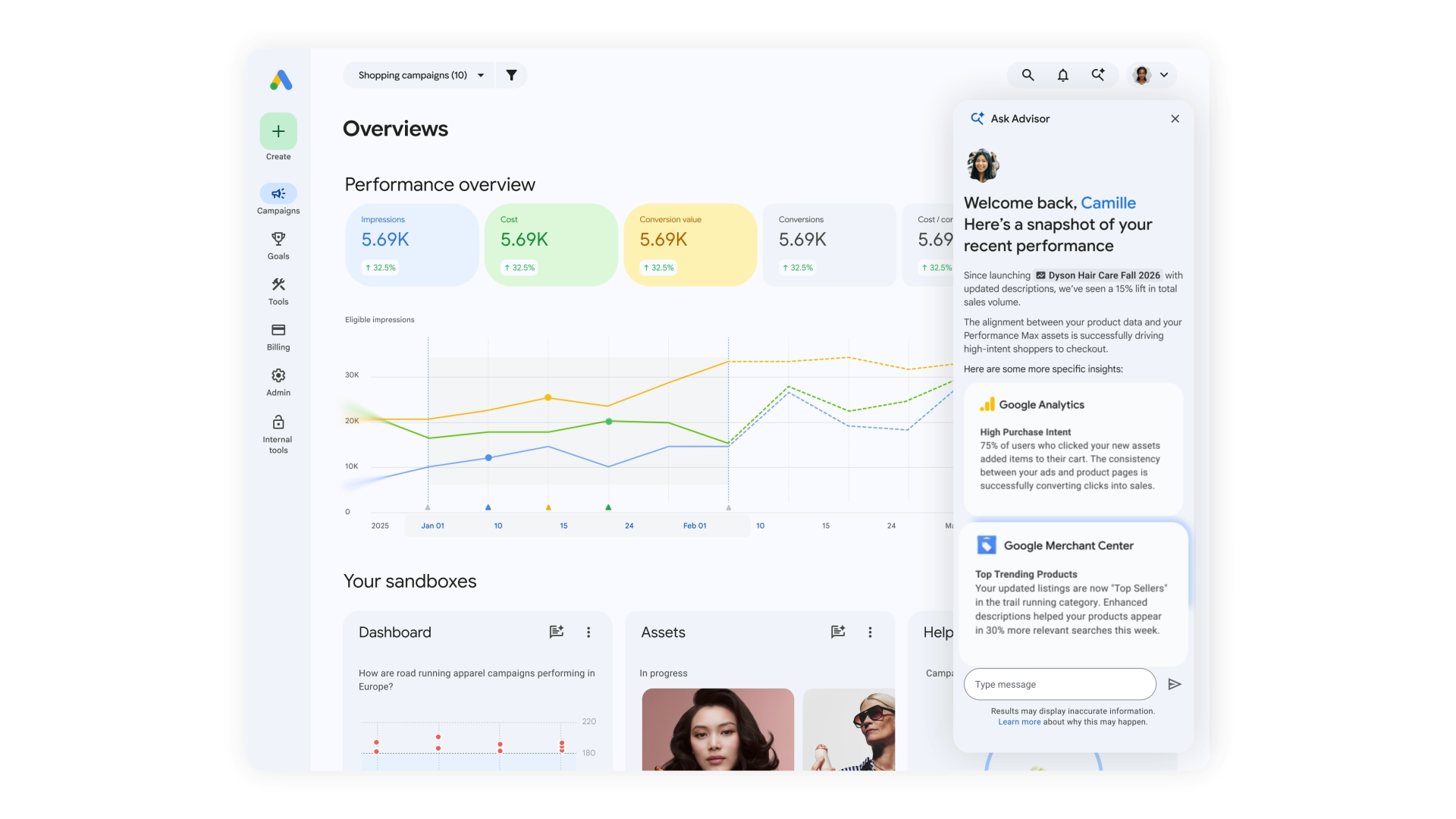
This was especially visible in the introduction of Ask Advisor, Google’s new cross-product AI collaborator built with Gemini. The system creates what Google described as a “continuous thread of intelligence” across multiple marketing platforms, helping businesses connect insights, campaign performance, customer behavior and operational decision-making within a more unified workflow.
Related Article: Does the Return of Google Data Studio Signal the End of Analytics Silos?
Google repeatedly emphasized simplification, and repeatedly positioned modern measurement as “the engine for growth in the AI era,” while acknowledging that fragmented data sources, disconnected operational processes and technical complexity continue to limit businesses’ ability to fully benefit from AI-powered systems. Many of the new capabilities introduced at Marketing Live focused on compressing those operational challenges into more unified, AI-assisted workflows.
Taken together, the announcements suggest Google no longer views advertising, analytics, commerce and AI as separate product categories. Instead, the business increasingly appears to be building an AI-native operational ecosystem where Gemini functions as the reasoning, orchestration and optimization layer that connects them all.
Separate from its Marketing Live 2026 announcements, Google also unveiled Google Pics, an AI-powered image generator and editor built into Google Workspace. The product, powered by Google's advanced AI imaging models, is designed to give Workspace users the ability to create and refine images directly within tools like Google Slides and Google Drive — without relying on third-party design platforms.
Unlike traditional AI image generators, Google Pics is built around what the company describes as precision editing: the ability to move, resize and transform individual objects, modify text within images, or target specific areas for updates. Google is positioning this as a step beyond the typical prompt-and-generate workflow, giving users more granular control over outputs.
The product is currently in limited testing through Google's Workspace Experiments program, with general availability expected in the coming months for Business Standard and higher Workspace plans, as well as Google AI Pro and Ultra subscribers.
The announcement reflects the same broader pattern visible across Google's marketing ecosystem announcements: Gemini-powered AI capabilities moving from standalone tools into the everyday workflow applications businesses already use.
As Search becomes increasingly conversational, Google is also rethinking how advertising appears within AI-driven experiences. At Google Marketing Live 2026, Google introduced a new generation of Gemini-powered Search advertising formats designed to function less like traditional sponsored placements and more like contextual guidance that is integrated directly into AI-assisted discovery workflows.
Among the most notable additions were Conversational Discovery ads, which dynamically generate ad creative tailored to a user’s specific query and context. Rather than relying on static keyword matching, Gemini evaluates the conversational intent behind a search and generates customized responses designed to address the shopper’s stated needs.
Google also introduced “Highlighted Answers,” which allow sponsored placements to appear alongside AI-generated recommendation lists when the system determines an advertiser’s offering is highly relevant to the user’s request.
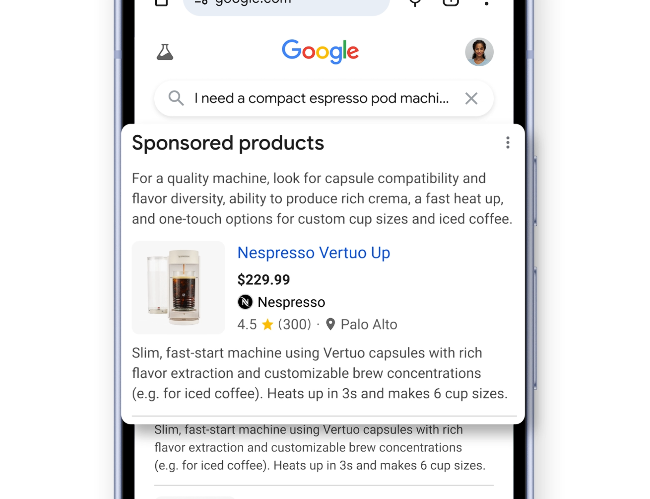
The announcements reflect a broader shift in how Search itself is evolving. As AI-generated responses increasingly replace traditional lists of blue links, Google appears to be positioning advertising as part of the conversational experience rather than a separate destination. To support transparency, Google stated that these formats will remain clearly labeled as sponsored content while also including independent AI-generated explainers summarizing product or service information alongside advertiser creative.
Google is also extending Gemini-powered experiences into commerce-focused Search advertising. New AI-powered Shopping ads can generate real-time product explainers designed to help consumers evaluate complex purchasing decisions, while “Business Agent for Leads” embeds conversational AI agents directly into advertisements to answer questions and assist with lead generation operations.
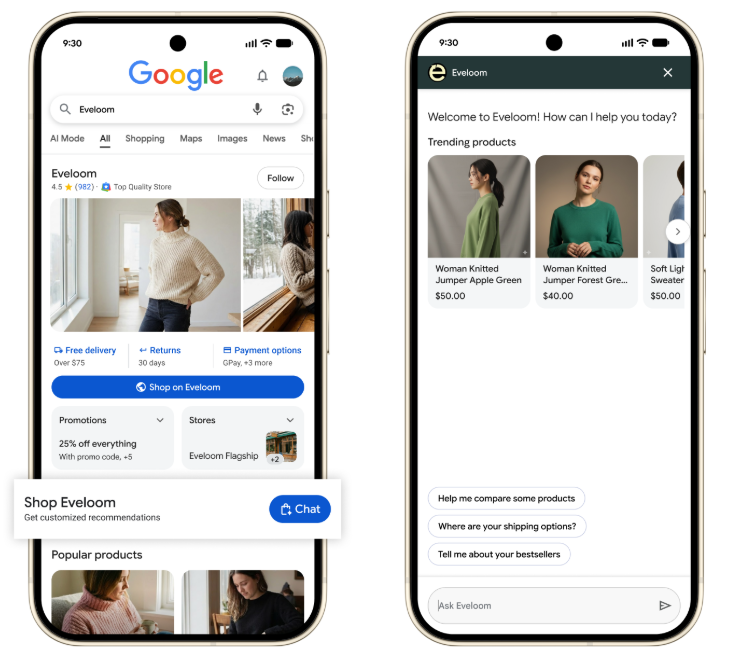
The business also expanded its Direct Offers initiative, which now integrates more deeply with its Universal Commerce Protocol (UCP) infrastructure. The updated system allows brands to dynamically assemble personalized promotional bundles using Gemini while enabling native checkout experiences directly from Search for merchants participating in UCP.
The announcements suggest Google is steadily transforming Search advertising from a primarily keyword-driven placement model into a conversational recommendation and decision-support system powered by Gemini.
Related Article: Google's AI Search Playbook Is Here. Spoiler: SEO Still Matters.
Commerce also played a major role at Google Marketing Live 2026, where Google expanded its vision for agentic shopping experiences powered by UCP.
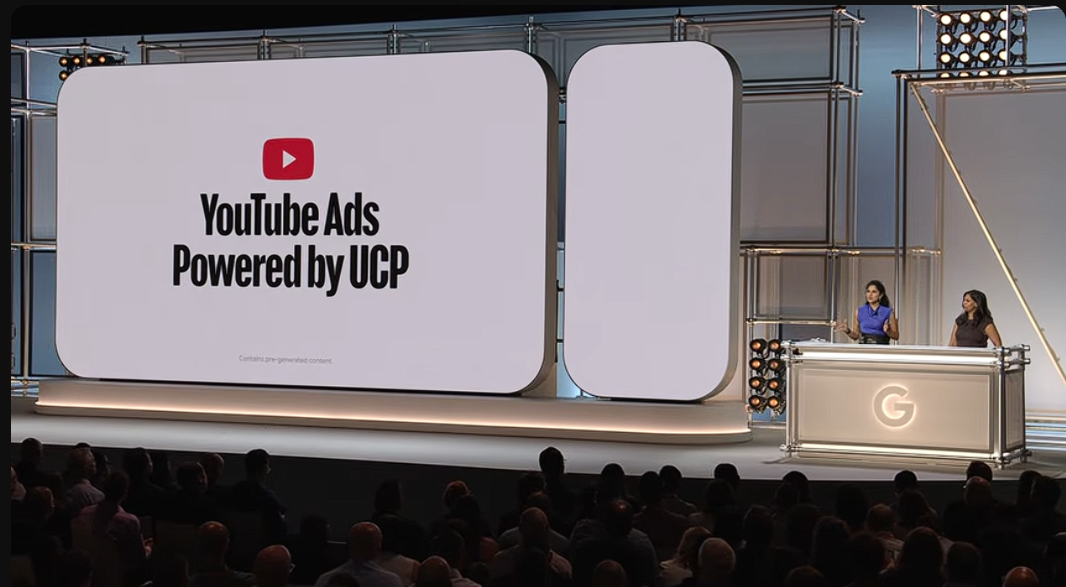
Originally introduced at Google I/O this week, UCP is designed to create persistent shopping continuity across Google, including Search, Gemini, YouTube and Shopping. At Marketing Live, Google revealed that UCP-powered commerce capabilities are now extending directly into advertising experiences, including YouTube Shopping ads and Demand Gen campaigns with product feeds.
The expansion reflects Google’s broader effort to reduce friction between product discovery, engagement and purchase completion. Rather than redirecting shoppers through disconnected experiences, the system enables consumers to maintain a persistent Universal Cart across retailers and services while checking out through Google Pay or retailer websites.
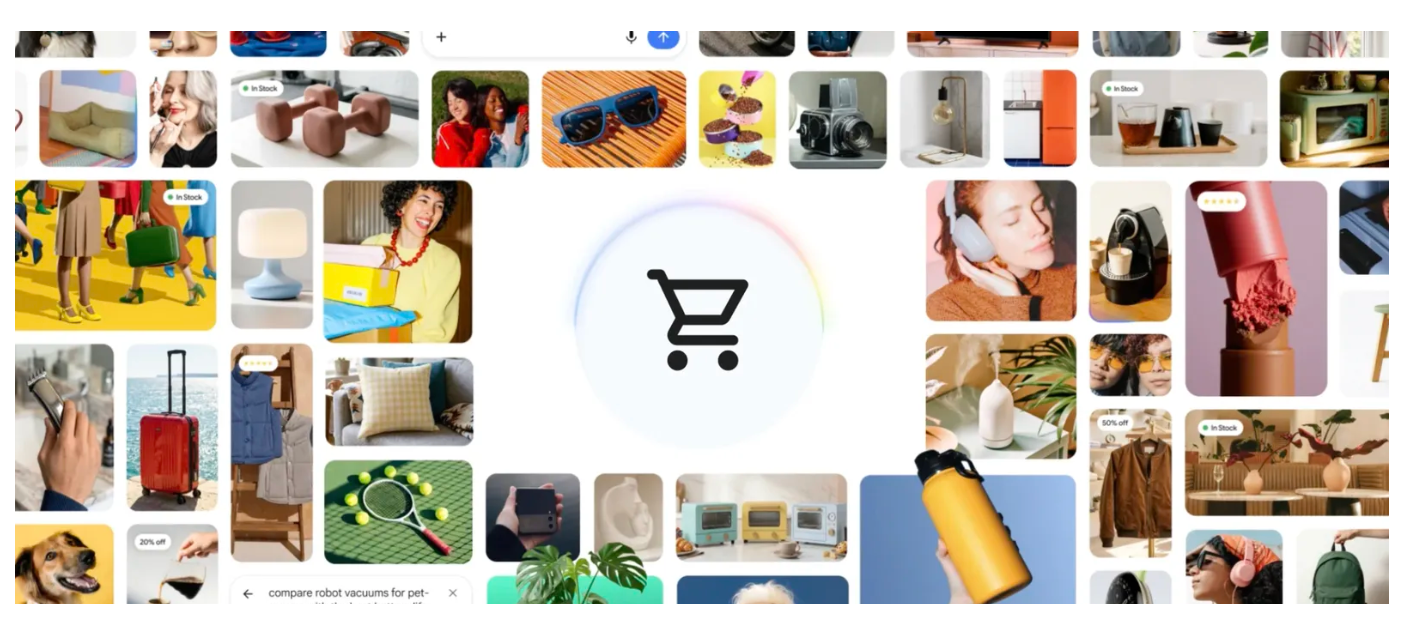
Google stated that retailers remain the “merchant of record,” a distinction that may help reassure brands concerned about maintaining ownership of customer relationships and transaction data as AI-driven commerce ecosystems expand.
The announcements also suggest YouTube is evolving into a more transaction-oriented commerce platform. Google demonstrated how UCP-powered checkout experiences can allow shoppers to purchase products directly from advertising experiences, while financing options from providers including Affirm and Klarna become embedded directly within Google Pay.
In addition, Google introduced new Merchant Center capabilities designed to help brands compete within AI-powered shopping environments. New AI performance insights tools will enable retailers to measure visibility across AI-driven websites and apps, while conversational product attributes are intended to help brands optimize listings for increasingly natural-language shopping interactions occurring in Gemini and AI Mode.
The announcements suggest Google is steadily building an interconnected commerce ecosystem where advertising, AI discovery, recommendation systems and transaction workflows operate as part of a unified operational layer.
Related Article: OpenAI vs. Google: Two Visions for the Future of Agentic Commerce
Google’s latest advertising updates also reflect a broader change in how AI is being positioned within modern marketing operations. Rather than simply assisting marketers with recommendations and reporting, many of the new capabilities that were just announced increasingly place AI at the center of campaign execution, bidding and budget allocation.
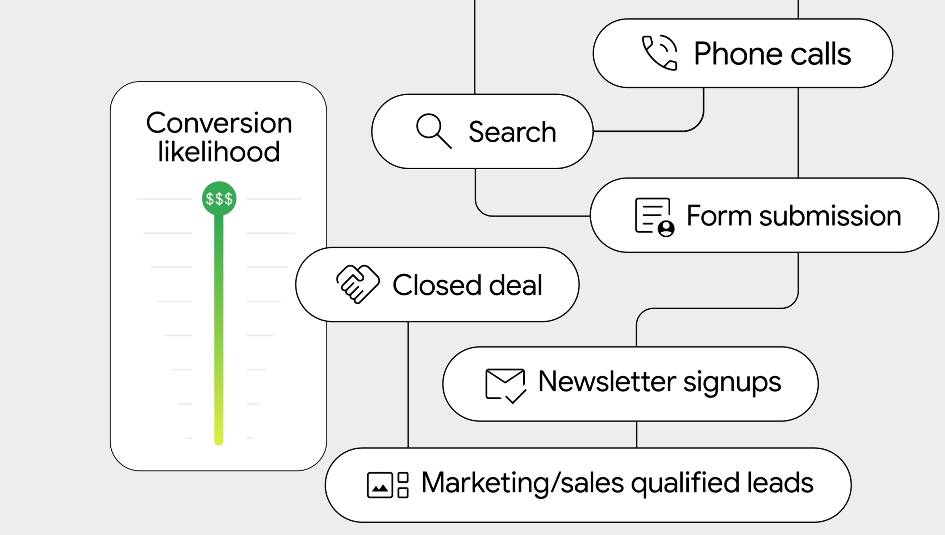
Among the most significant announcements was “journey-aware bidding,” a beta capability designed to help Google AI better understand complex lead generation journeys that may involve multiple touchpoints, including phone calls, form submissions, newsletter signups and other non-direct conversion events. According to Google, the system allows Search campaigns to learn from both “biddable and non-biddable conversion goals,” giving AI a broader view of customer behavior across the sales journey.
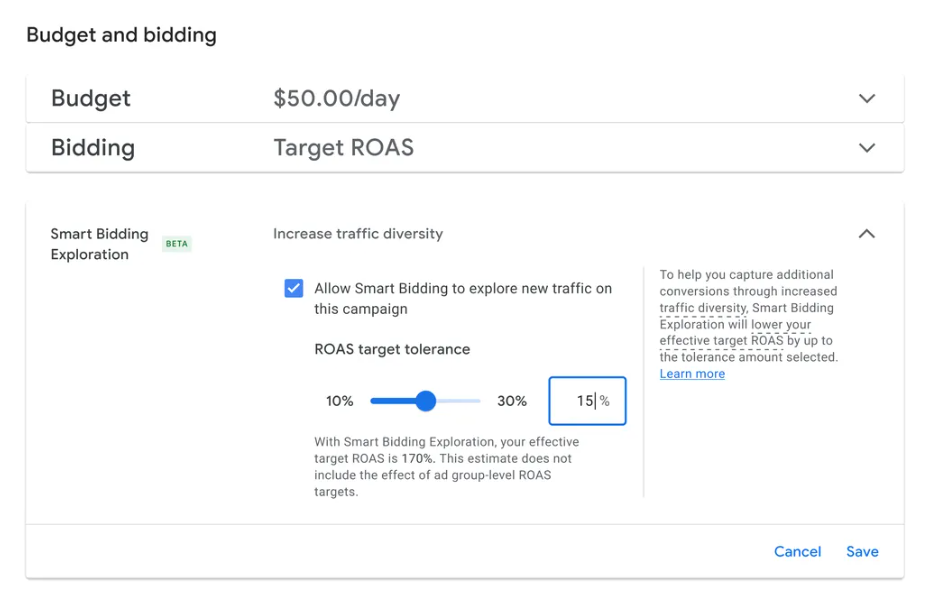
Google also expanded Smart Bidding Exploration, which uses AI to identify potentially valuable queries that advertisers may not have previously targeted. It stated that Search campaigns using the feature saw an average 27% increase in unique converting users. The capability is expected to expand to Performance Max and Shopping campaigns in beta.
Budgeting itself is also becoming more adaptive. Google announced upgrades to “demand-led pacing,” which dynamically adjusts spending based on predicted consumer demand while remaining within monthly budget limits. The approach reflects a growing change in direction toward AI-driven operational decision-making, where marketers increasingly define goals and constraints while AI systems continuously optimize campaign execution.
All in all, the announcements suggest Google is steadily repositioning marketing AI from a recommendation engine into an operational layer that is capable of dynamically adjusting bidding strategies, spend allocation and conversion targeting with less manual oversight.
As AI increasingly reshapes advertising and customer engagement, Google is also placing greater emphasis on the underlying data and measurement systems that are required to support AI-driven decision-making. Central to that effort is Google’s continued expansion of Data Manager, which is gaining new visualization and integration capabilities that are intended to help businesses better understand how customer data flows across platforms such as BigQuery, Google Drive, HubSpot and Shopify. Google also recently announced updates to its tagging infrastructure designed to simplify deployment and improve data collection accuracy without requiring extensive manual coding.
The announcements reflect a broader industry challenge that has been emerging in the AI era: advanced automation systems are only as effective as the quality and accessibility of the data that is feeding them. As AI-generated campaigns, autonomous bidding systems and predictive optimization become more common, marketers increasingly require unified data environments that are capable of supporting real-time decision-making across multiple channels and touchpoints.
Google is also expanding its focus on causal analytics and incrementality measurement through new additions to its Meridian marketing mix modeling framework, including Meridian GeoX, which is designed to help businesses measure geographic campaign impact and validate media effectiveness using causal experimentation techniques.
These announcements suggest Google is attempting to position measurement not simply as a reporting function, but as a foundational operational layer for AI-driven marketing systems. They also stated that Google Analytics is evolving into a “turnkey command center for growth,” signaling a broader shift toward integrated platforms that combine measurement, optimization and AI-driven decision support within a unified environment.
Related Article: Google's Meridian Is Here — And It's Changing CMOs' Marketing Budget
YouTube also emerged as a central component of Google’s broader AI-driven marketing strategy at Google Marketing Live 2026, as they continued repositioning the platform from a primarily awareness-focused media channel into a more integrated performance and commerce engine.
Many of the event’s YouTube-related announcements centered on Demand Gen, Google’s AI-powered campaign platform designed to help brands connect discovery, engagement and conversion across video experiences.
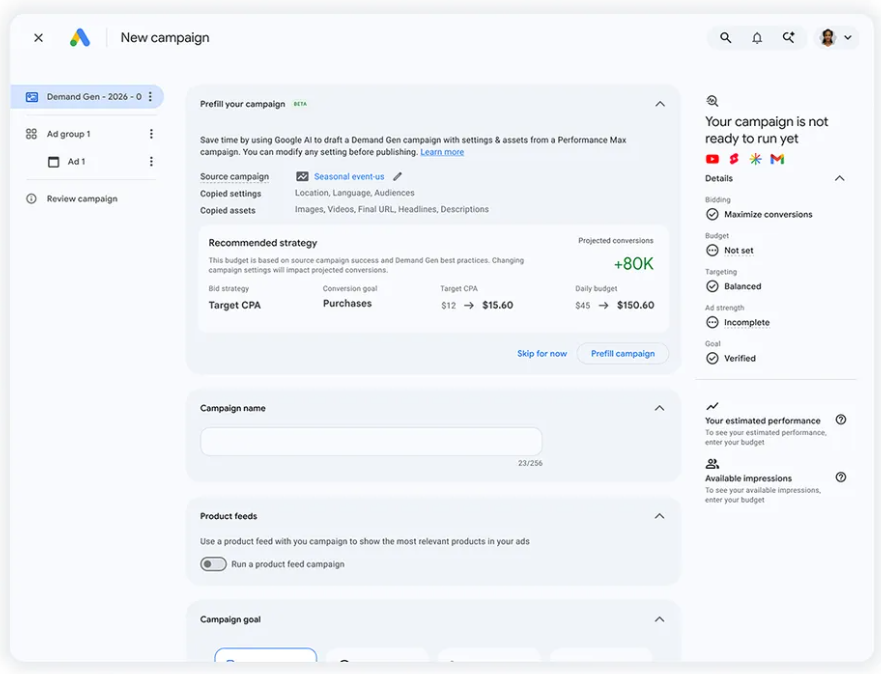
Google introduced new creator-focused tools powered by Gemini that are intended to help businesses identify relevant creators, optimize audience targeting and better align campaigns with emerging consumer intent signals.
The updates also reflect Google’s growing effort to make YouTube more directly transactional. Product feeds, shopping integrations and UCP-powered checkout experiences increasingly allow viewers to move from product discovery to purchase completion without leaving Google’s broader ecosystem.
Google repeatedly emphasized YouTube’s role as a trusted discovery platform, particularly as AI-generated recommendations and conversational search experiences continue reshaping how consumers research products and brands. By combining creator-driven engagement with AI-powered targeting and commerce infrastructure, Google appears to be positioning YouTube as a central platform for both brand influence and measurable conversion.
The announcements suggest YouTube is evolving beyond traditional video advertising into a more dynamic environment where media consumption, conversational discovery and transaction workflows increasingly operate together within a unified AI-driven ecosystem.
The announcements at Google Marketing Live 2026 suggest Google is building something broader than a collection of AI-powered marketing features. Across advertising, commerce, measurement and customer engagement, Google increasingly appears to be positioning Gemini as the connective intelligence layer coordinating campaigns, predictive optimization, conversational discovery and transaction flows across its ecosystem.
Many of the event’s announcements focused on reducing operational friction through AI-assisted systems, a theme that also emerged during this week’s Google I/O 2026, where Gemini was repeatedly framed not simply as an assistant, but as a foundational orchestration layer spanning Google’s broader platforms and services.